2026 Bamboo vs Wood Kitchenware B2B Profit Analysis – Jibamboo
Financial Breakdown: Cost vs. Margin Analysis
In the B2B space, the \”green\” label is only as good as the numbers behind it. While some procurement managers hesitate at the slightly higher entry point of bamboo, a closer look at the wholesale margin analysis reveals a significant opportunity for bottom-line growth. We don\’t just sell sustainability; we sell a superior financial vehicle for your retail or distribution business.
Unit Cost vs. Retail Value: The Premium Gap
It’s a common misconception that higher production costs eat your margins. In reality, while the manufacturing of bulk bamboo cutting boards and utensils runs approximately 10–15% higher than basic hardwoods, the perceived value in the eyes of the consumer is vastly higher. In today’s market, bamboo carries a 20–30% retail price premium, effectively turning a slightly higher COGS (Cost of Goods Sold) into a much larger net gain.
The Margin Math: Bamboo vs. Traditional Timber
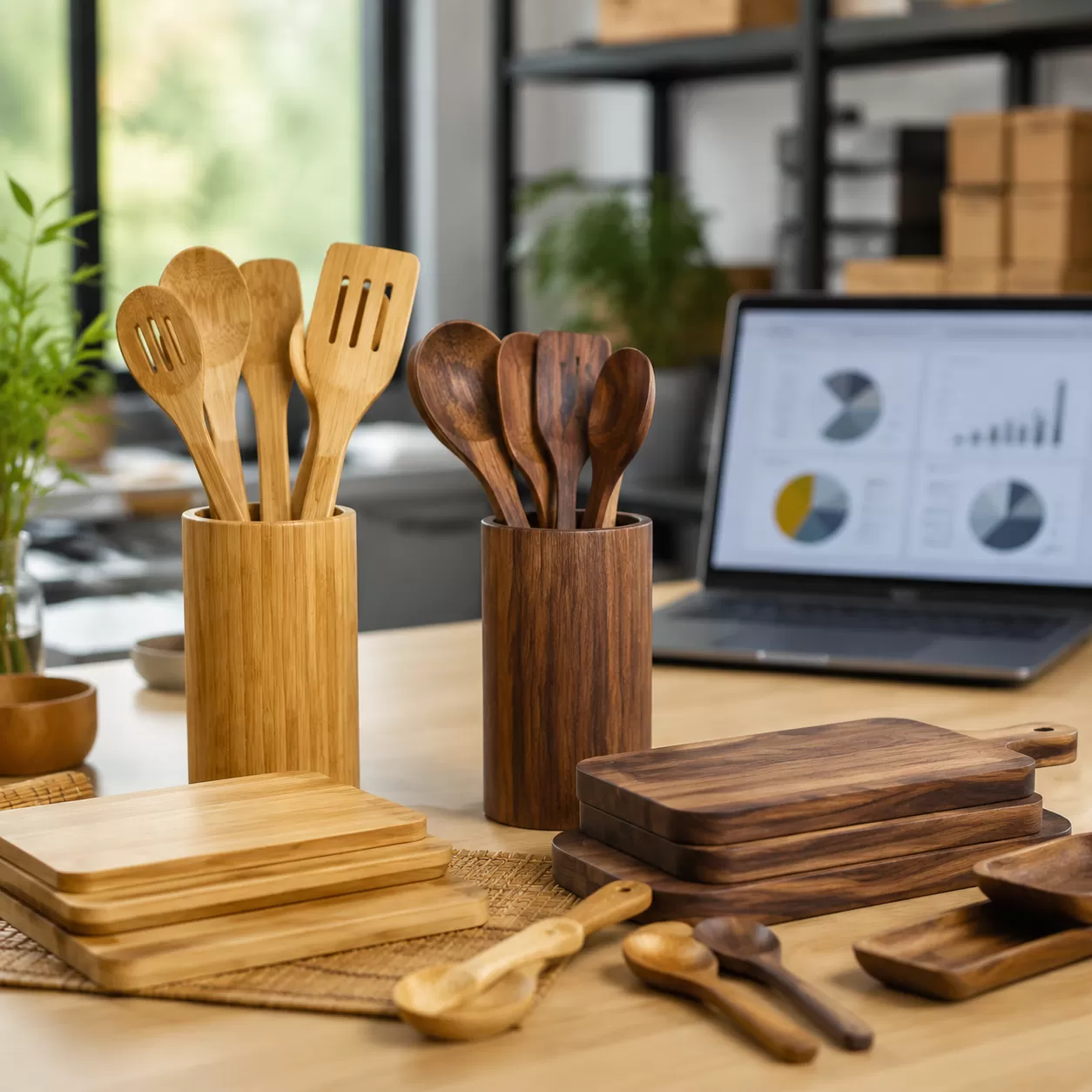
When we run a side-by-side comparison of kitchenware profit margins, bamboo consistently outperforms traditional hardwoods like Beechwood or mid-tier Teak.
| Metric | Standard Beechwood | Premium Moso Bamboo |
|---|---|---|
| Average Unit Cost | $4.50 | $5.15 (+~15%) |
| Suggested Retail Price | $14.99 | $19.49 (+~30%) |
| Gross Profit per Unit | $10.49 | $14.34 |
| Profit Margin % | 69.9% | 73.5% |
Inventory Velocity: Faster Turnover, Lower Carrying Costs
Profit isn\’t just about the spread; it’s about inventory velocity. Our data indicates that products with \”Sustainable\” and \”Rapidly Renewable\” certifications see 35% faster shelf turnover than non-certified timber alternatives.
- Higher Sell-Through Rates: Modern consumers prioritize eco-friendly procurement, leading to fewer markdowns.
- Reduced Dead Stock: The high demand for wholesale kitchenware trends 2026 ensures that bamboo SKUs don\’t sit in your warehouse collecting dust (or depreciating).
- Better ROI: Faster cycles mean you can reinvest your capital into new shipments more frequently, compounding your annual returns.
By choosing Moso bamboo wholesale lines, you aren\’t just buying a product; you\’re securing a high-velocity asset with a built-in retail markup that traditional wood simply cannot match.
Material Science: The Durability ROI of Bamboo vs Wood Kitchenware
Hardness & Density: The Moso Advantage
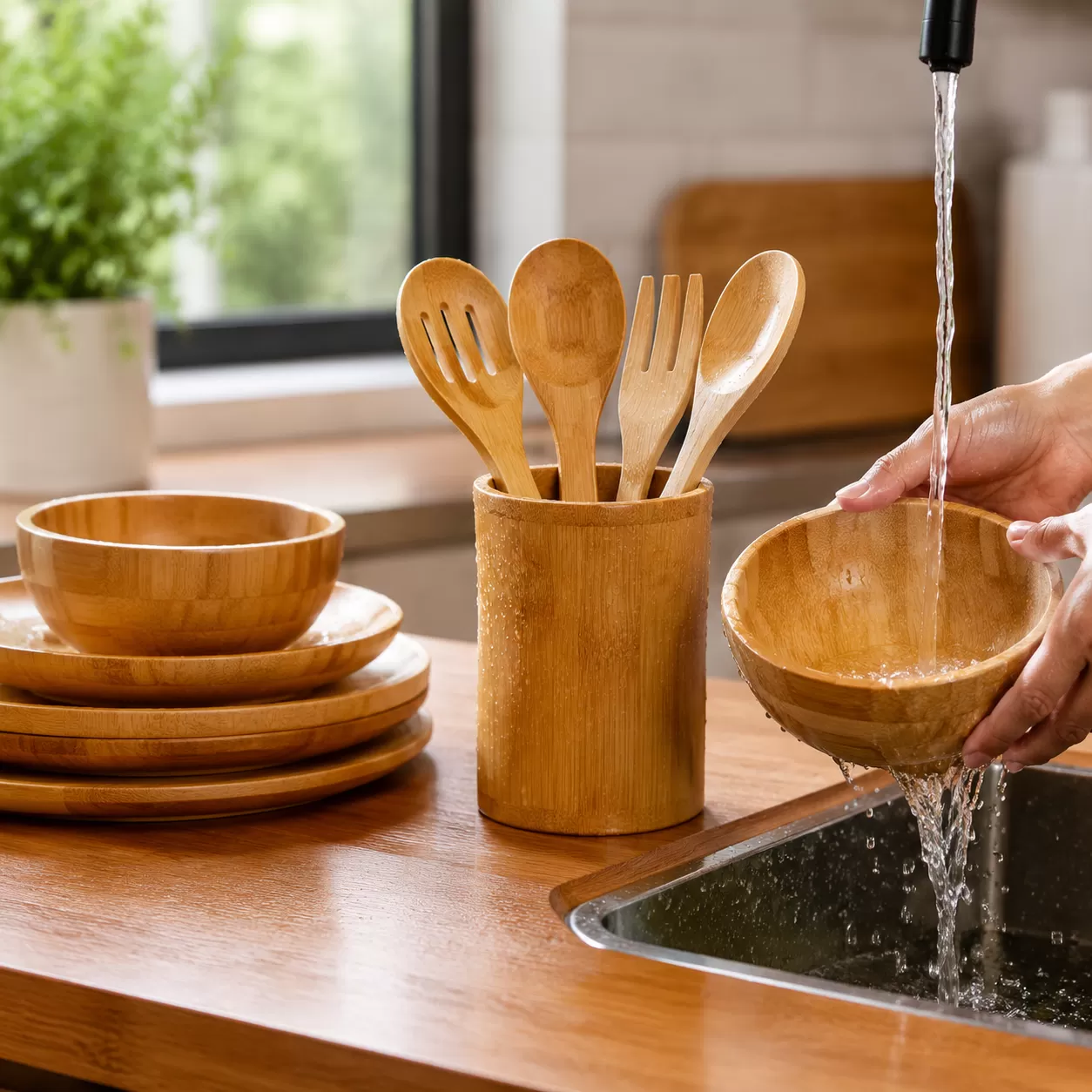
When we analyze the longevity of Bamboo vs Wood Kitchenware, the fiber structure of Moso bamboo is the clear winner. On the Janka hardness scale, Moso bamboo often exceeds 1,300 lbf, making it harder than many traditional hardwoods like Oak or Maple. In a high-traffic commercial kitchen, this material hardness comparison proves that bamboo resists deep knife scarring better than wood, preventing bacteria traps and maintaining a \”like-new\” aesthetic for the consumer.
Moisture Resistance: Eliminating Warehouse \”Dead Stock\”
One of the biggest profit killers in B2B procurement is \”dead stock\” caused by environmental factors. Traditional wood is highly porous; it breathes, swells, and cracks when humidity fluctuates.
- Warp Resistance: Bamboo’s cross-laminated construction provides superior dimensional stability.
- Reduced Spoilage: Its natural water-repellent properties significantly lower the risk of mold during long-term warehouse storage or sea freight.
- Product Integrity: By sourcing items like an extendable bamboo sink cutting board, you ensure the inventory remains shelf-ready regardless of the climate.
Antimicrobial Properties: Selling Hygiene as a Feature
In today’s market, I don’t just sell a tool; I sell peace of mind. Bamboo contains a natural bio-agent known as \”Bamboo Kun,\” which gives anti-microbial kitchen tools an inherent resistance to pest and bacterial growth. This is a massive B2B marketing edge. While hardwood requires intensive chemical sealing to remain hygienic, bamboo offers a cleaner, safer food preparation surface naturally.
Comparative Durability Matrix
| Metric | Moso Bamboo | Standard Hardwood (Beech/Maple) |
|---|---|---|
| Surface Hardness | Very High (Resists Scratches) | Moderate (Prone to Dents) |
| Moisture Absorption | Low (Resists Warping) | High (Prone to Cracking) |
| Hygiene Profile | Natural Antimicrobial | Requires Synthetic Coatings |
| Warehouse Lifespan | Long (Climate Resilient) | Limited (Sensitive to Humidity) |
This superior bamboo vs. hardwood durability ensures that your retail partners see fewer returns, protecting your margins and reinforcing your reputation for quality.
Supply Chain Resilience: Why Bamboo Wins the Long Game
In the B2B kitchenware sector, supply chain stability is the difference between a profitable quarter and a logistical nightmare. Traditional hardwoods like oak, teak, or maple take 30 to 50 years to mature, leaving buyers vulnerable to price volatility and timber shortages. Moso bamboo, however, reaches full structural maturity in just 3 to 5 years. This makes it one of the most rapidly renewable resources on the planet, ensuring a predictable and scalable raw material stream.
Harvesting Cycles and Supply Stability
While global timber markets face increasing pressure from logging bans and environmental degradation, bamboo thrives. As a professional bamboo products manufacturer and supplier, Jibamboo maintains a vertically integrated supply chain that bypasses the common bottlenecks of the wood industry. This stability allows us to offer consistent wholesale pricing and reliable lead times for high-volume orders.
- Bamboo Growth: 3–5 year harvest cycle.
- Timber Growth: 30–50+ year harvest cycle.
- Market Impact: Bamboo provides a \”buffer\” against the price spikes seen in the traditional lumber market.
Meeting 2026 Sustainability Mandates
The regulatory landscape is shifting rapidly. With the 2026 EU and US \”Zero-Deforestation\” mandates approaching, businesses must prove their sourcing does not contribute to forest loss. Bamboo is naturally exempt from many of these timber-related pressures because it is a grass, not a tree. By sourcing a custom size bamboo cutting board or other kitchen essentials from Jibamboo, B2B buyers secure a product line that is inherently compliant with future environmental laws.
Carbon Credits and Compliance ROI
Sustainability is now a financial metric. Bamboo’s ability to sequester carbon at a rate significantly higher than most trees provides a \”Green Premium\” that translates into faster retail turnover. We ensure all our manufacturing processes meet strict FSC and ISO standards, providing the documentation necessary for global distribution. Partnering with a dedicated bamboo products manufacturer ensures your inventory is not only eco-friendly but also future-proofed against tightening global trade regulations.
The B2B Comparison Matrix: Bamboo vs. Wood
To maximize your wholesale margin analysis, you need a clear look at the numbers. While traditional hardwoods have their place, the data shows that Moso bamboo wholesale options consistently offer a faster return on investment and better durability metrics for high-volume retail.
Quantitative Material & Profit Breakdown
| Performance Metric | Moso Bamboo | Traditional Hardwood (Beech/Teak) |
|---|---|---|
| Tensile Strength | ~28,000 PSI | 12,000 – 16,000 PSI |
| Growth Cycle | 3–5 Years (Rapidly Renewable) | 30–50+ Years |
| Wholesale Price Floor | Lower (Optimized Production) | Moderate to High |
| Retail Price Ceiling | High (Eco-Premium) | Moderate |
| Average ROI Period | 4–6 Months | 8–12 Months |
Strategic Decision Framework
Deciding which material to stock depends on your brand\’s specific market positioning. Use this framework to align your procurement with consumer demand:
- Targeting the Modern Eco-Consumer: Bamboo is the clear winner. The \”sustainable\” narrative allows for higher markups on everyday items. A bamboo bread slicer with crumb tray is a perfect example of a functional, high-margin SKU that outperforms wood in gift-market settings.
- Targeting High-Traffic Utility: Bamboo’s superior material hardness makes it more resistant to knife scars and water damage. This reduces the rate of customer returns and improves your long-term brand reputation for quality.
- Optimizing Kitchen Storage Lines: For organizational products, bamboo offers a better strength-to-weight ratio. High-velocity items like a bamboo silverware organizer allow for thinner, more durable walls than wood, maximizing internal storage space—a key selling point for your B2C customers.
The Bottom Line for Importers
If your goal is supply chain resilience and high inventory turnover, bamboo is the superior choice for 2026. It balances a lower wholesale entry point with a higher perceived value, effectively widening your profit gap compared to traditional timber products.
Sourcing with Jibamboo: Your Manufacturing Partner
Choosing the right partner is the difference between a struggling SKU and a top-tier retail line. As a dedicated bamboo products supplier and manufacturer, we provide the infrastructure needed to scale your brand without the typical supply chain headaches.
OEM/ODM & Private Labeling
We specialize in turning your concepts into market-ready products. Our OEM/ODM capabilities allow you to launch high-margin retail lines with custom branding, ensuring your kitchenware stands out on the shelf. Whether you need a unique shape or specific functional features, we manage the technical execution so you can focus on sales.
Quality Assurance: FSC & ISO Standards
Reliability is built into our factory floor. We maintain strict FSC certification and ISO standards to guarantee that every unit meets international safety and sustainability benchmarks.
- FSC Certified: Ensuring ethical, zero-deforestation sourcing.
- ISO Compliance: Rigorous quality control at every stage of production.
- Food-Grade Safety: All products are tested for chemical-free durability.
Logistics Efficiency
We maximize your ROI by focusing on logistics efficiency. Shipping air is a waste of money; therefore, we meticulously optimize 40HQ container loads to fit the maximum number of units possible. This reduces your per-unit shipping cost and improves your overall carbon footprint.
| Service Feature | B2B Benefit |
|---|---|
| Custom Branding | Increases brand equity and retail price ceiling. |
| Bulk Capacity | Ensures stock stability during peak demand. |
| Streamlined Logistics | Lowers landed costs for global distribution. |
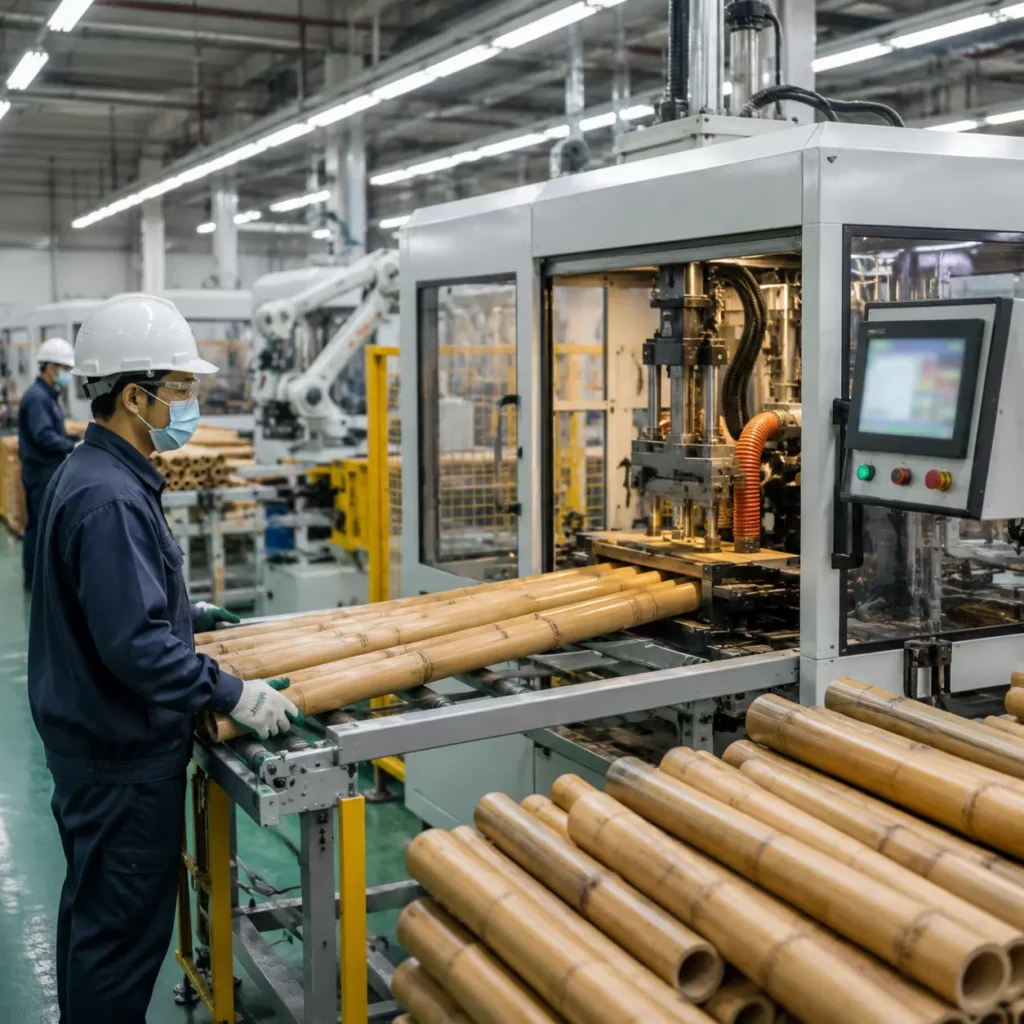
As a trusted partner, we invite you to learn more about our manufacturing process and how we maintain the highest standards in the industry. We don\’t just supply products; we build the backbone of your kitchenware category.
Frequently Asked Questions for B2B Buyers
Is bamboo kitchenware actually more profitable than hardwood?
Yes, the numbers favor bamboo. While raw production costs can be 10–15% higher due to the specialized lamination process, the retail \”green premium\” allows for a 20–30% price increase. Our wholesale margin analysis shows that bamboo products often achieve a higher gross profit per unit than beechwood. Furthermore, because bamboo is one of the world\’s most rapidly renewable resources, you face fewer \”out-of-stock\” scenarios compared to slow-growing hardwoods, ensuring consistent cash flow.
How do I verify the FSC certification of a supplier?
Transparency is key in any Bamboo vs wood kitchenware procurement strategy. As a reputable Bamboo products Manufacturer and Supplier, we provide a specific FSC license code. You should verify this code on the official FSC Public Search database to ensure the certificate is active and covers the specific kitchenware categories you are purchasing. Valid certification is essential for meeting 2026 sustainability mandates in the EU and US markets.
What is the typical MOQ for private label bamboo kitchenware?
For private label bamboo manufacturing, the Minimum Order Quantity (MOQ) typically starts at 500 to 1,000 units per SKU. This allows for customized laser engraving and bespoke packaging. If you are looking for where to find bulk bamboo kitchenware suppliers that offer flexibility for initial market testing, we provide tiered options to help you scale your inventory without overextending your capital.
Can bamboo handle high-heat commercial dishwasher environments?
While Moso bamboo boasts impressive material hardness and density, we recommend hand-washing for maximum longevity. High-heat commercial dishwashers and harsh chemicals can eventually break down the natural resins and adhesives used in lamination. To ensure the best cost-effectiveness for your clients, we suggest marketing bamboo as a premium, hand-care material that outperforms wood in moisture resistance and hygiene when maintained correctly.
| Feature | Bamboo Performance | B2B Profit Impact |
|---|---|---|
| Growth Cycle | 3–5 Years | High supply stability; lower risk of price spikes. |
| Material Hardness | Higher than Oak/Maple | Fewer returns due to surface scarring or damage. |
| Consumer Demand | Growing (Eco-conscious) | Faster inventory velocity and higher retail ceilings. |
| Customization | Excellent (Laser/CNC) | High margins for private label and OEM branding. |

Celia
Celia is a bamboo product manufacturing expert dedicated to green innovation and sustainable supply chain solutions. With over 10 years of industry experience, he helps global businesses build premium private-label eco products. Outside of work, he is an avid nature explorer.
Frequently Asked Questions

Get a Fast, Custom Bamboo Quote