Global Bamboo Supply Chain 2026 Trends and Solutions
The State of the Global Bamboo Market in 2026
Are you concerned about securing reliable, eco-friendly materials in an increasingly volatile market? As a dedicated bamboo products manufacturer, we navigate these complexities daily. Understanding the global bamboo market trends 2026 is the first step to building a resilient, future-proof procurement strategy.
Macro-Economic Drivers Shaping Demand
The surge in bamboo demand is not an accident. It is heavily fueled by stringent global legislation against single-use plastics and aggressive, government-backed green building initiatives. As global industries pivot, reliable green building materials supply and eco-friendly packaging have transitioned from niche alternatives to mandatory operational standards.
Production Hubs and Emerging Markets
To meet this massive shift, the map of global bamboo production is actively evolving:
- Traditional Heavyweights: Established regions in Asia remain the core production hubs, offering the mature infrastructure required for high-volume B2B manufacturing.
- Emerging Regional Markets: New cultivation zones are rapidly developing across Latin America and parts of Africa, aiming to localize supply lines and reduce international dependency on a single geographic region.
Anticipated Trade Bottlenecks
Despite the booming demand, securing a steady flow of materials requires strategic foresight. Cross-border trade in 2026 faces distinct, unavoidable challenges:
- Geopolitical Shifts: Fluctuating trade agreements and shifting tariffs directly impact manufacturing lead times and final landed costs.
- Regulatory Friction: Tighter customs inspections regarding sustainable bamboo sourcing certifications can severely stall shipments for unprepared wholesale buyers.
- Transit Congestion: The soaring demand for eco-materials is straining traditional freight routes, making proactive logistics planning absolutely essential.
By closely monitoring these macro-level shifts, we successfully help our B2B partners bypass regional bottlenecks and secure uninterrupted access to premium wholesale bamboo products.
Foundational Pillar 1: Sustainable Harvesting and Raw Material Security
A resilient bamboo supply chain begins at the soil. Navigating the global bamboo supply chain in 2026 requires acknowledging that raw material security is completely dependent on sustainable forestry. As a dedicated wholesale bamboo products supplier, we know that without certified, responsibly managed forests, long-term supply stability simply does not exist.
Mitigating Ecological Impact for High-Volume B2B Needs
Meeting massive B2B procurement demands cannot come at the expense of the environment. We balance large-scale manufacturing with ecological preservation by strictly enforcing sustainable bamboo harvesting practices.
- Selective Harvesting: We cut only mature bamboo stalks (typically 4 to 5 years old), allowing the intricate root systems to remain intact and regenerate naturally.
- Certified Yield Practices: We rely on recognized eco-certifications to guarantee that our harvesting does not deplete local ecosystems.
- Soil Health Management: We monitor the harvesting grounds to ensure the land remains fertile and structurally sound for future growth cycles.
Securing Premium Materials Through Farming Partnerships
To maintain a truly sustainable forestry supply chain, we avoid unpredictable spot-buying. Instead, we forge long-term, direct partnerships with local bamboo farmers. This approach locks in premium raw materials and stabilizes our sourcing costs against market volatility.
Securing these top-tier materials at the source is exactly how we maintain consistent, commercial-grade quality across our production lines. Whether we are manufacturing large structural pieces or a specialized OEM bamboo food tray for the hospitality sector, raw material quality dictates the final outcome. By treating farmers as foundational partners rather than expendable vendors, we secure the exact volume, density, and quality required for reliable global distribution.
Advancements in Bamboo Raw Material Logistics
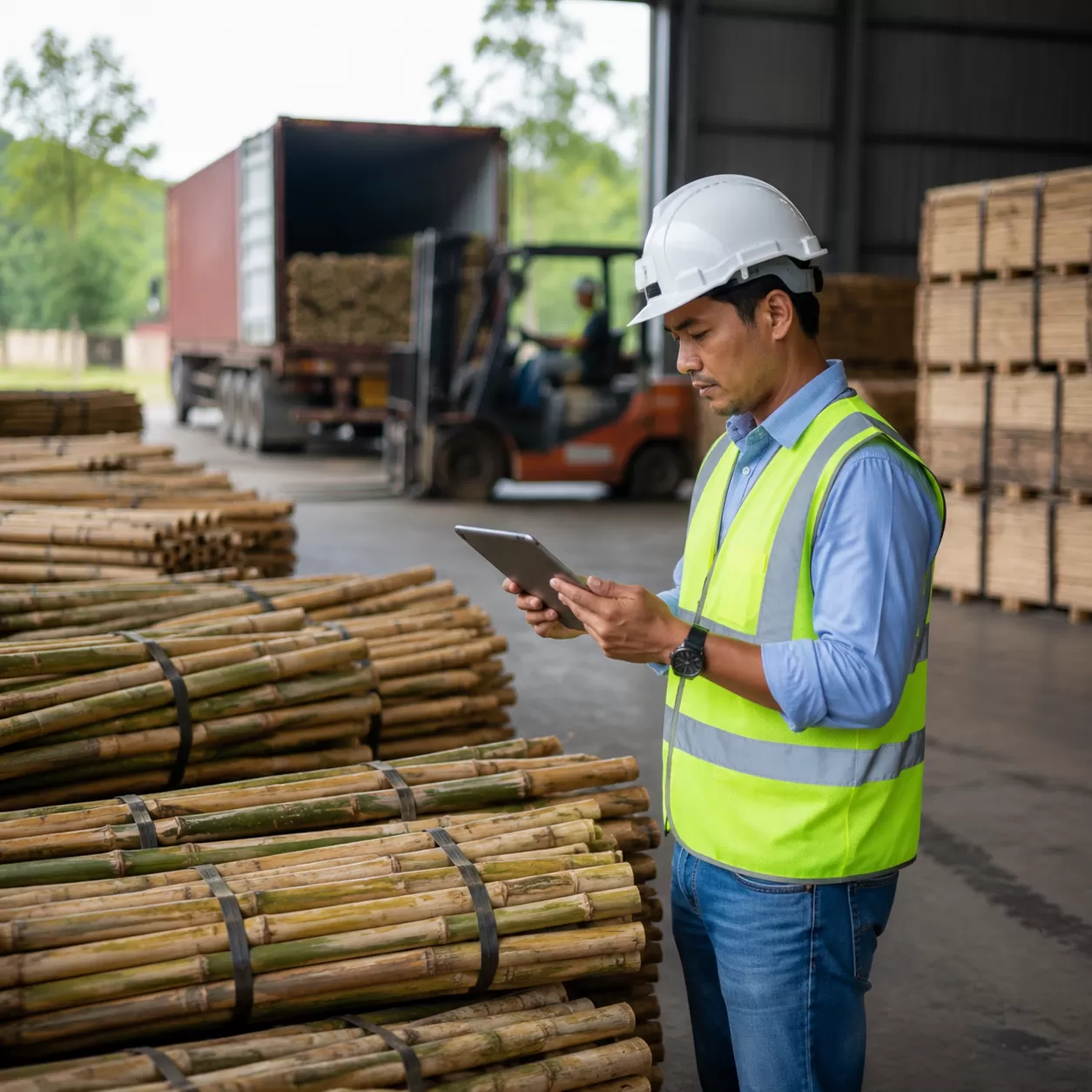
Moving raw bamboo from the forest to the factory floor presents unique challenges. Freshly harvested bamboo carries a high moisture content, making it susceptible to mold, cracking, and spoilage if transit is delayed. To mitigate these risks, we enforce strict environmental controls during transport. Understanding how moisture affects the material, such as knowing exactly when bamboo boards need to be tested for humidity, is essential for ensuring that only premium, undamaged raw materials enter our manufacturing facilities.
Modern Freight Strategies for Eco-Materials
Reducing lead times for international buyers requires a complete overhaul of traditional shipping methods. In 2026, efficient bamboo raw material logistics rely on highly optimized freight strategies designed to keep supply chains moving swiftly.
- Direct Routing: We systematically bypass unnecessary transshipment hubs to cut transit times and get materials to the production line faster.
- Climate-Controlled Transport: Proactively managing temperature and humidity fluctuations during transit preserves the structural integrity of the bamboo.
- Strategic Consolidation: Grouping shipments effectively lowers freight costs and significantly reduces the overall carbon footprint of our operations.
Technological Integration in Transit Visibility
Blind spots in the supply chain are no longer acceptable for B2B procurement. We utilize advanced digital tracking systems to provide complete transit visibility from the moment materials leave the harvest site. Through real-time data integration, our partners can monitor shipments at every stage. This modernization of freight and logistics for eco-materials ensures highly accurate delivery estimates, minimizes unexpected delays, and allows wholesale buyers to plan their production and inventory cycles with absolute confidence.

Foundational Pillar 3: Precision Inventory Management
Balancing Supply and Demand in 2026
Navigating the global bamboo supply chain in 2026 requires extreme precision in how we handle stock. As a dedicated bamboo products manufacturer, we know that hitting the sweet spot between supply and demand is the only way to survive market volatility. Stockouts halt production lines and damage client trust, while overstocking ties up crucial capital and warehouse space.
When it comes to bamboo goods, the debate between Just-In-Time (JIT) manufacturing and strategic stockpiling is constant. Pure JIT is highly efficient but leaves supply chains vulnerable to harvest delays or shipping bottlenecks. We utilize a hybrid approach. By maintaining calculated strategic stockpiles of raw materials, we ensure we always have the capacity to make bamboo board materials and final products on schedule, while reserving lean JIT practices for final product assembly.
Digitized Bamboo Inventory Management Solutions
Protecting wholesale buyers from unexpected supply chain shocks comes down to data. We integrate advanced digitized inventory systems to maintain total control over our stock flows.
Modern inventory management shields B2B procurement processes through several key mechanisms:
- Real-Time Tracking: Cloud-based platforms monitor stock levels instantly, from raw bamboo bundles to finished goods ready for export.
- Predictive Forecasting: Historical data and market trend analysis allow us to anticipate demand spikes, adjusting our strategic stockpiling weeks in advance.
- Delay Mitigation: Digitized systems alert us to potential raw material shortages before they happen, giving us the buffer time needed to adjust production schedules and keep client deliveries on track.
By treating inventory management as a dynamic, tech-driven process, we provide wholesale buyers with the reliability they need to scale their eco-friendly product lines confidently.
Foundational Pillar 4: Carbon Footprint Tracking and ESG Compliance
In 2026, simply calling a product \”eco-friendly\” is no longer enough. The modern buyer\’s mandate requires hard, measurable data to prove actual sustainability. As a direct bamboo products manufacturer, we know that hitting your targets for ESG compliance in procurement means having full visibility into the environmental impact of every item you source.
Proving Sustainability with Measurable Data
We have integrated advanced carbon footprint tracking manufacturing protocols across our entire production process. From the moment the bamboo is harvested in the forest to the final delivery at your warehouse, we monitor and record our emissions. This high level of supply chain transparency in 2026 gives B2B buyers the exact metrics they need to satisfy strict international ESG (Environmental, Social, and Governance) reporting standards.
How We Track and Report Emissions
To keep our carbon footprint low and your environmental reporting accurate, we focus on several key methodologies:
- Complete Lifecycle Tracking: We measure energy and resource use at every stage, whether we are processing raw bamboo material or manufacturing a foldable bamboo 2-tier dish drying rack for a global OEM partner.
- Digitized Data Collection: We use modern software tools to calculate fuel consumption during logistics and electricity usage on the factory floor, replacing estimates with real numbers.
- ESG Standard Alignment: We structure our carbon data outputs to seamlessly match international environmental reporting requirements, allowing procurement managers to avoid greenwashing and prove their sustainability claims with confidence.
Why Partnering with a Direct Bamboo Manufacturer Changes the Game
Navigating the global bamboo supply chain in 2026 requires cutting out unnecessary complexities. Relying on brokers and middlemen introduces significant risks to your B2B bamboo procurement strategy, directly impacting both your bottom line and product quality.
The Hidden Risks of Using Brokers:
- Fragmented Communication: Information gets lost between the factory floor and the final buyer, leading to missed specifications and costly delays.
- Margin Inflation: Every intermediary adds a markup, artificially inflating the cost of your wholesale orders.
- Opaque Sourcing: Middlemen often lack the visibility required to guarantee sustainable bamboo harvesting practices or provide accurate ESG reporting.
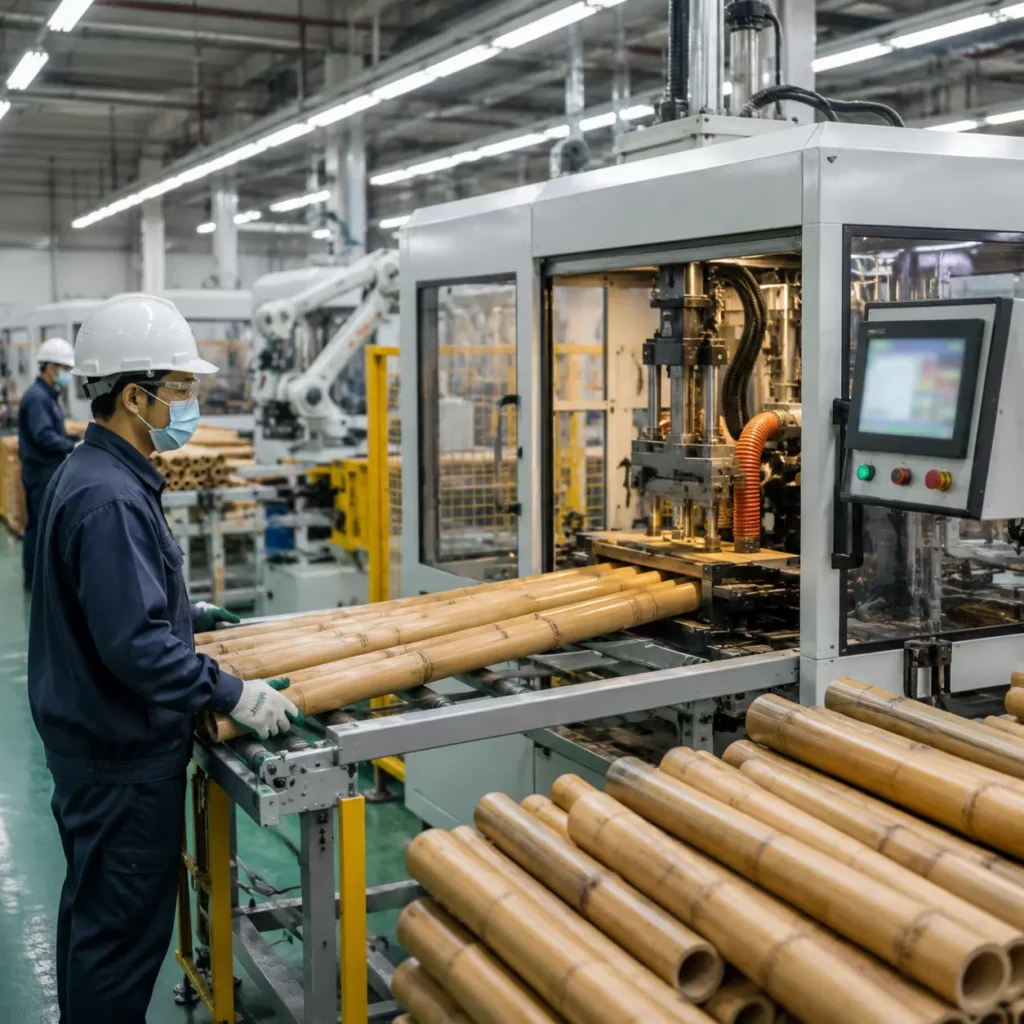
As a dedicated bamboo products manufacturer, we leverage vertical integration to eliminate these bottlenecks. Controlling the entire process—from the forest soil to final raw material logistics—ensures the absolute supply chain transparency 2026 demands. By managing operations in-house, we maintain strict quality oversight, whether we are milling raw materials or finalizing high-volume orders like a custom bamboo drawer organizer bins set for our B2B partners.
The Vertical Integration Advantage:
- Unmatched Cost-Efficiency: Direct-to-buyer pricing models protect procurement managers from unexpected margin hikes.
- Consistent Quality Control: End-to-end operational oversight ensures every batch meets precise international standards.
- Complete Transparency: Direct manufacturers provide immediate, accurate data for carbon footprint tracking and ethical sourcing compliance.
Actionable Strategies for B2B Bamboo Procurement
Navigating the Global Bamboo Supply Chain in 2026 requires procurement managers to adopt proactive, data-driven approaches. As a direct bamboo products manufacturer, we see firsthand what separates successful global buyers from those struggling with delays and inflated costs. Here are the core strategies to secure your supply line.
Vetting Suppliers Beyond \”Greenwashing\”
Surface-level eco-labels are no longer sufficient. To ensure true ESG compliance in procurement, you must demand hard data.
- Request lifecycle audits: Verify carbon footprint tracking from the forest to the factory door.
- Check certifications: Insist on recognized sustainable forestry and harvesting credentials.
- Demand transparency: Ensure your wholesale bamboo products supplier can trace every batch of raw material back to its exact origin.
Building Resilient, Multi-Node Networks
Relying on a single transit route or facility exposes your inventory to geopolitical and environmental risks. Smart supply chain management involves building multi-node networks. By diversifying logistics hubs and working with suppliers who have integrated warehousing capabilities, you create buffer zones that keep goods moving even during regional disruptions.
Securing Long-Term Contracts
Raw material price fluctuations can severely impact your bottom line. Securing long-term manufacturing agreements hedges against these volatile market shifts. When you partner directly with the source—whether you need to scale up sustainable kitchenware or make a custom bamboo box for premium retail packaging—locked-in contracts guarantee both predictable pricing and prioritized raw material allocation. This ensures your inventory management remains stable throughout the entire fiscal year.
Frequently Asked Questions (FAQs)
What are the biggest logistical challenges for the global bamboo supply chain in 2026?
The primary hurdles revolve around bamboo raw material logistics and transit visibility. Managing international lead times while preventing moisture damage or spoilage during transit remains complex. Additionally, fluctuating freight costs and port bottlenecks force procurement teams to constantly optimize shipping routes to maintain steady inventory levels.
How does carbon footprint tracking impact B2B bamboo procurement?
Carbon footprint tracking manufacturing is no longer optional for global trade. B2B buyers now require verifiable data to meet strict environmental regulations and corporate sustainability goals. Procurement teams actively prioritize suppliers who can provide measurable emissions data from the forest to the final delivery, making supply chain transparency 2026 a strict baseline for securing long-term contracts.
Why is vertical integration critical for ensuring ESG compliance in bamboo manufacturing?
Working directly with a vertically integrated bamboo products manufacturer eliminates the blind spots often created by brokers and middlemen. Controlling the entire process allows us to enforce sustainable bamboo harvesting practices, oversee fair labor conditions, and guarantee material authenticity. This end-to-end oversight ensures total ESG compliance, resulting in consistently high-quality, ethically made items—whether producing large-scale green building materials or specialized consumer goods like a foldable bamboo lap desk with drawer handle.

Celia
Celia is a bamboo product manufacturing expert dedicated to green innovation and sustainable supply chain solutions. With over 10 years of industry experience, he helps global businesses build premium private-label eco products. Outside of work, he is an avid nature explorer.
Frequently Asked Questions

Get a Fast, Custom Bamboo Quote