How to Make Bamboo Board Step by Step Guide
Overview of the Bamboo Board Manufacturing Process
Understanding how to make bamboo board requires a look into a highly specialized and meticulous manufacturing process. As a dedicated bamboo products manufacturer and supplier, we transform raw, hollow bamboo culms into solid, durable, and versatile panels. This transformation involves precision cutting, advanced treatment, and high-pressure pressing to create premium boards that meet the rigorous demands of the global market.
What is Bamboo Plywood?
Bamboo plywood is an engineered solid panel crafted entirely from natural bamboo strips. Instead of utilizing traditional timber, we process and compress rectangular bamboo fibers, bonding them together under extreme heat and pressure with eco-friendly adhesives. The result is a structural, flat panel that rivals, and often exceeds, traditional hardwood in strength, dimensional stability, and aesthetic appeal.
Key Benefits of Using Bamboo for Boards
Bamboo is rapidly becoming the premium material of choice for builders, designers, and furniture makers worldwide. The advantages of integrating bamboo into your projects are substantial:
- Ultimate Sustainability: Bamboo is a highly renewable grass that reaches full maturity in just 3 to 5 years, making it an incredibly eco-friendly alternative to traditional wood.
- Exceptional Durability: Engineered bamboo boards boast remarkable hardness, resisting dents, scratches, and daily wear better than many conventional hardwoods.
- Dimensional Stability: Thanks to the cross-lamination manufacturing process, bamboo boards are highly resistant to warping, shrinking, and moisture fluctuations.
- Aesthetic Versatility: Available in natural light tones or rich carbonized colors, bamboo offers a sleek, modern grain that elevates any interior space.
Comparison: Bamboo Board vs. Traditional Hardwood
| Feature | Traditional Hardwood | Premium Bamboo Board |
|---|---|---|
| Growth Cycle | 30-50 Years | 3-5 Years |
| Hardness Rating | Moderate to High | Extremely High |
| Sustainability | High Deforestation Risk | 100% Renewable |
| Moisture Resistance | Prone to warping | Highly Stable |
Initial Preparation: Harvesting and Splitting
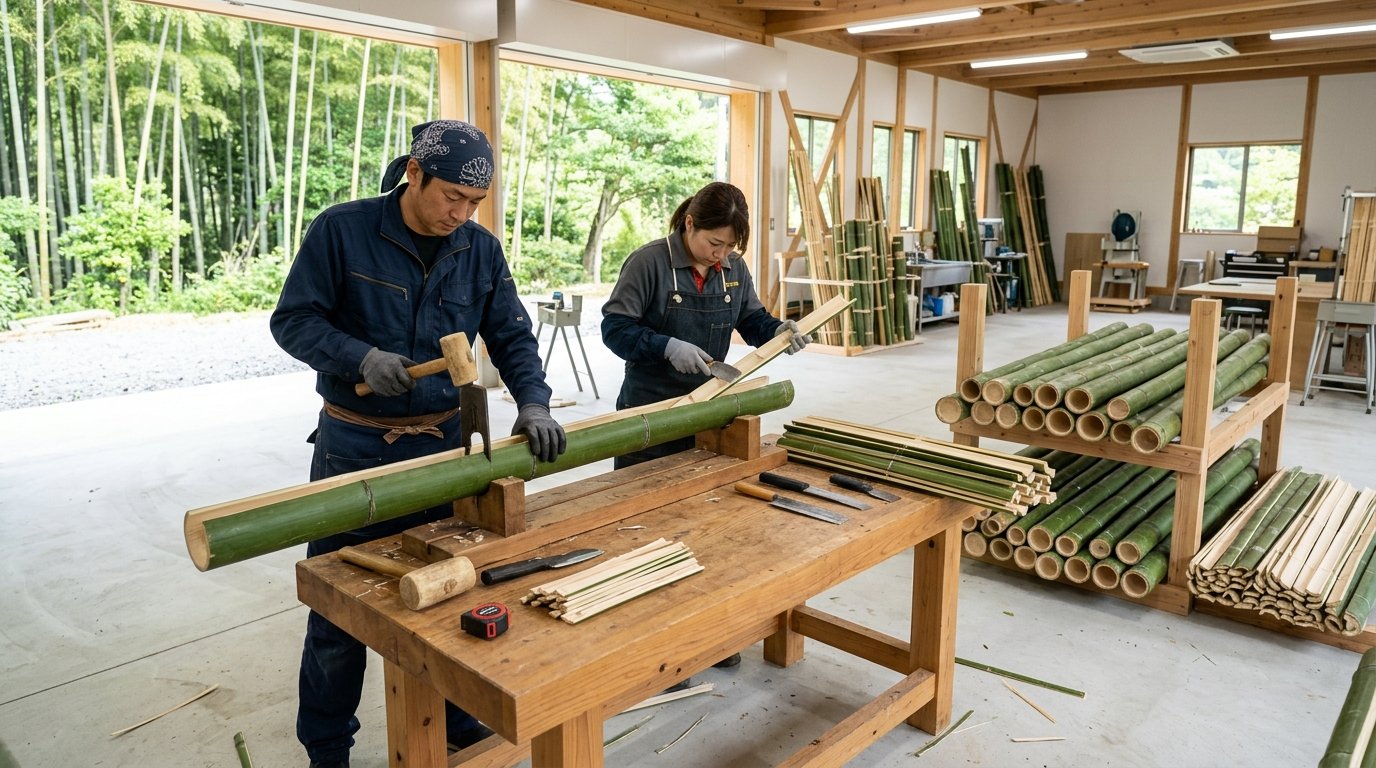
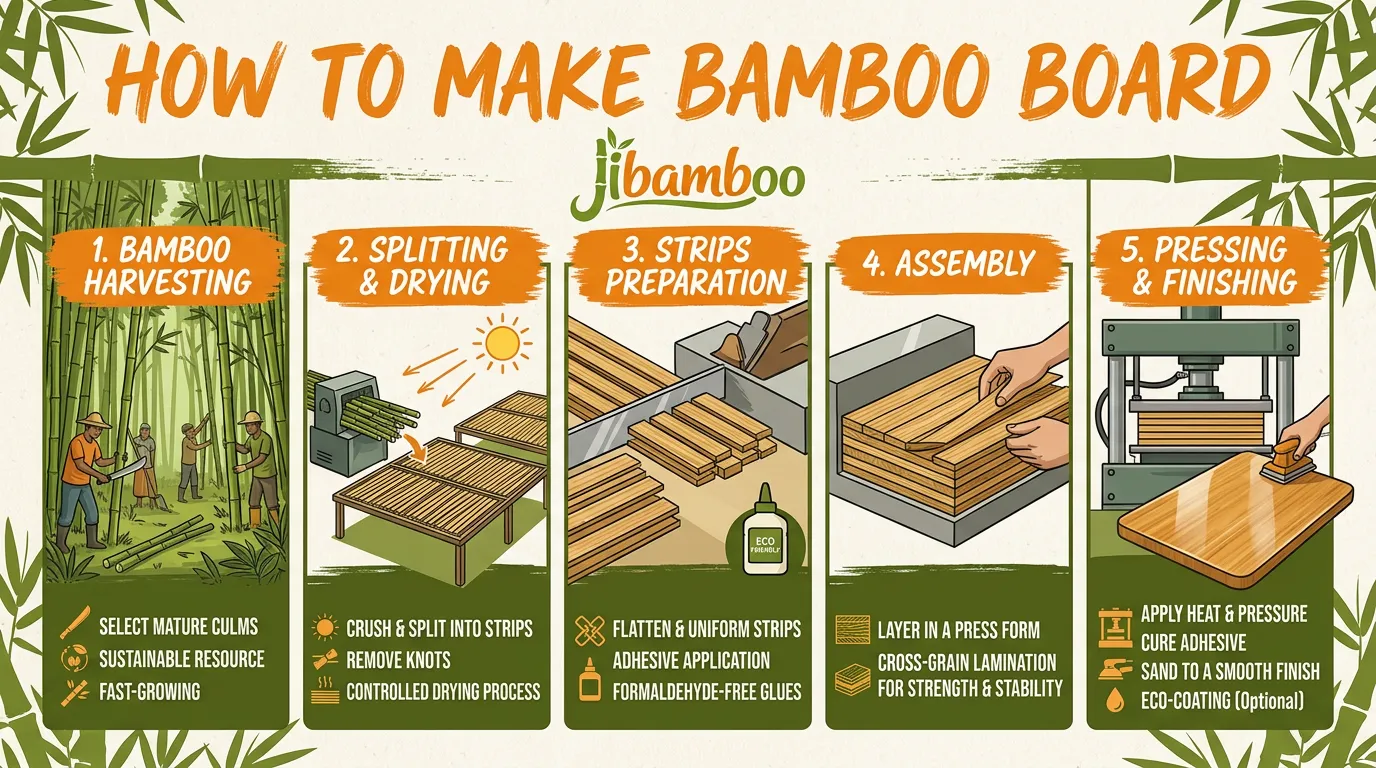
When people ask how to make bamboo board, the process always begins right at the source: the bamboo forest. The initial preparation dictates the quality, strength, and longevity of the final material.
Selecting Mature Bamboo Culms
The secret to figuring out how to make bamboo into board successfully lies in the age of the raw material. We specifically select mature Moso bamboo culms that are between four and six years old.
- Peak Strength: At four to six years, the bamboo fibers reach their maximum density and structural integrity.
- Avoiding Weakness: If harvested too early, the bamboo is too soft and holds too much moisture.
- Preventing Brittleness: If left to grow past six years, the culms become overly brittle and difficult to machine.
As an experienced China bamboo storage box manufacturer, we know firsthand that starting with strictly graded, mature raw materials is the only way to guarantee a durable, warp-resistant final product.
Splitting and Removing Bamboo Knots
Once the mature poles are harvested and transported to the facility, the physical transformation begins. If you have ever wondered how do they make bamboo board from a hollow, round tube, it all comes down to precision splitting and milling.
Here is the breakdown of the splitting phase:
- Cross-Cutting: The long bamboo poles are first cut into manageable sections, depending on the desired length of the final panels.
- Mechanical Splitting: The round sections are fed through specialized splitting machines that divide the tube into rough, uniform strips. While some DIY enthusiasts attempt to make bamboo board at home using basic hand splitters, commercial manufacturing relies on heavy-duty machinery for exact consistency.
- Milling and Knot Removal: Bamboo naturally features a waxy green outer skin and tough inner nodes (knots). We run the rough strips through a planer to completely strip away the outer bark and grind down the inner knots.
This crucial step leaves us with flat, rectangular bamboo strips consisting entirely of usable, high-quality fiber, setting the foundation for how to make board from bamboo that is perfectly flat and structurally sound.
Refining and Sizing Bamboo Strips
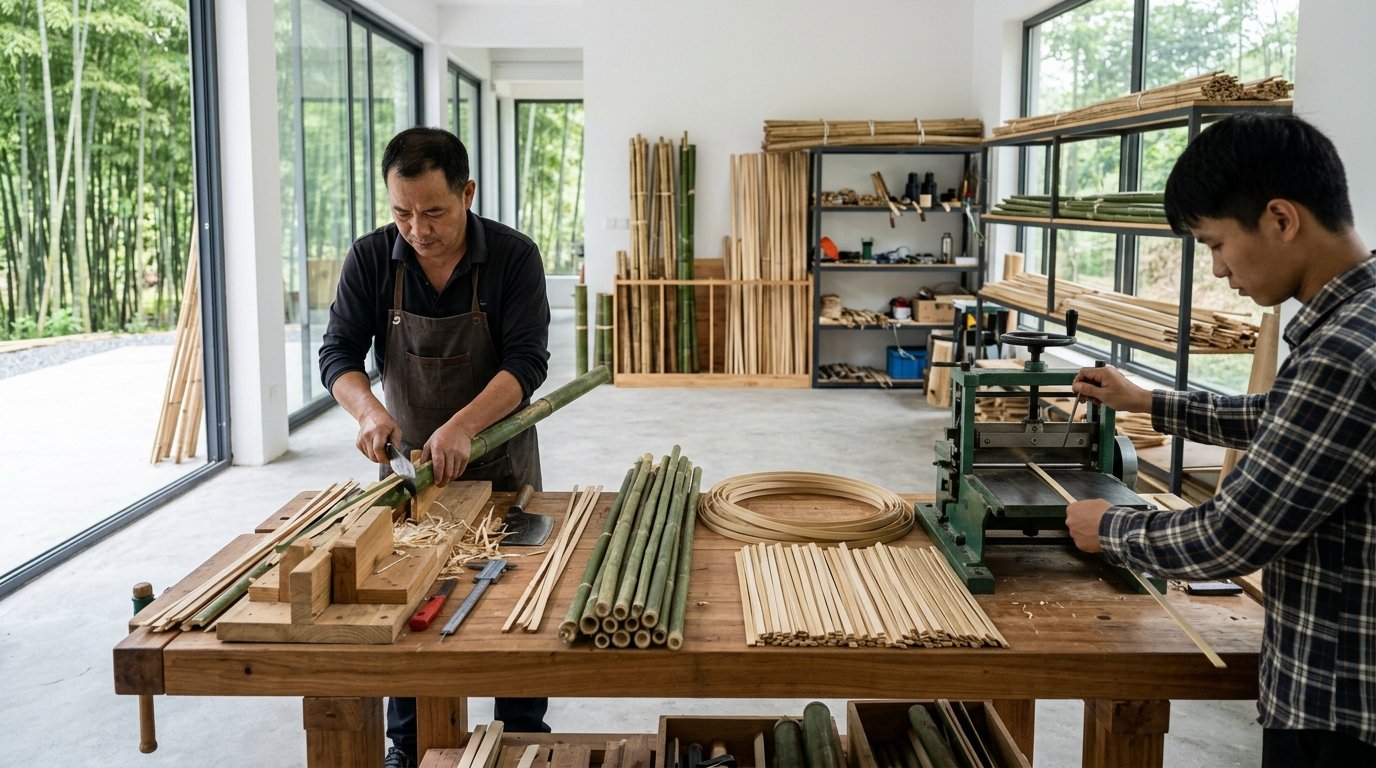
As a bamboo products Manufacturer and Supplier, we know that the secret to a flawless final product lies in the preparation. Once the raw bamboo is split, the rough pieces must be refined into perfectly uniform strips before they can be bonded together.
Planing Strips for Uniformity
When looking at how to make bamboo into board, precision milling is non-negotiable. The rough bamboo strips are passed through heavy-duty industrial planers. This process removes the tough outer green skin and the soft inner pith, leaving only the densest, most durable fibers behind.
- Exact Thickness: Every single strip is milled to identical dimensions to ensure a flat, even surface later on.
- Smooth Edges: The sides are perfectly squared off so the strips will sit flush against each other without gaps.
- Defect Removal: Any strips showing cracks or weak spots during planing are instantly discarded.
Creating perfectly uniform strips is the foundation for high-quality manufacturing, whether we are pressing large architectural panels or crafting items for a bamboo food tray wholesale order.
Drying and Moisture Content Control
People often ask how do they make bamboo board that doesn\’t warp, cup, or crack over time. The answer is strict moisture control. Freshly cut bamboo holds a massive amount of water. If you try to make bamboo board at home without properly drying the material first, the end result will inevitably split.
- Kiln Drying: We load the uniform strips into large, temperature-controlled kilns to slowly bake out the moisture.
- Target Moisture Level: The strips are dried until they reach a strict moisture content of 8% to 12%.
- Stabilization: After the kiln, the strips sit in a climate-controlled environment to acclimate and stabilize.
Understanding how to make board from bamboo means understanding how wood behaves in different environments. By strictly controlling the moisture content at this stage, we guarantee that the final bamboo boards will remain structurally sound in any climate around the world.
Treatment Processes: Color and Durability
Raw bamboo is full of natural sugars and starches. If we don\’t treat it properly, it won\’t last. In our facility, we use specific thermal and chemical treatments to ensure every board is durable, beautiful, and resistant to environmental wear. This is a critical stage in how to make bamboo board products that meet international quality standards.
Steam Treatment for Natural Finishes
For that classic, light-colored \”natural\” bamboo look, we use high-temperature steam. This process serves two main purposes:
- Sugar Removal: It breaks down the natural starches that attract insects.
- Color Consistency: It evens out the tone of the strips, ensuring the final board doesn\’t look patchy.
Carbonization for Darker Tones
When customers ask for a darker, \”caramel\” or \”coffee\” hue, we use carbonization. Instead of using stains or dyes, we put the bamboo strips into a high-pressure steam oven.
- Chemical Change: The heat \”cooks\” the sugars inside the fiber, turning them brown.
- Deep Color: Because the color change happens at a molecular level, it goes all the way through the strip. If you scratch a carbonized board, the color underneath is the same.
- Stability: Carbonized bamboo is often more moisture-resistant, which is why it is preferred for items like a rotating bamboo spice tea organizer with dividers that might sit on a damp kitchen counter.
Anti-Pest and Mold Treatment
Durability is our top priority. To prevent rot and infestation, we submerge the strips in a specialized solution, typically a borate-based bath. This is a vital step in how to make board from bamboo that can survive different climates.
- Pest Resistance: It makes the cellulose unpalatable to termites and powder post beetles.
- Fungicide: It prevents the growth of mold and mildew during shipping and long-term use.
- Eco-Friendly Standards: We ensure these treatments are safe for home use and meet strict VOC emission standards.
Assembly and High-Pressure Pressing
The assembly phase is where individual strips finally transform into a solid, durable surface. This stage determines the structural integrity and the final look of the material. When considering how to make bamboo board, the precision of the layout and the quality of the bond are the most critical factors.
Applying Adhesives and Gluing
We use high-strength, eco-friendly adhesives to coat the refined bamboo strips. As a professional bamboo products manufacturer and supplier, we prioritize low-emission resins that meet strict safety standards. The glue is applied evenly via roller machines to ensure every surface is covered, preventing any internal gaps or weak spots in the finished board.
Vertical vs. Horizontal Layering Techniques
The visual style of the board depends entirely on how we stack the strips before pressing. There are two primary orientations used when learning how to make bamboo into board:
- Horizontal Grain (Flat Pressed): Strips are laid flat, showcasing the natural \”knots\” or growth rings of the bamboo. This provides a traditional, organic look.
- Vertical Grain (Side Pressed): Strips are turned on their narrow side and glued together. This creates a contemporary, linear appearance with very fine grain lines.
- Cross-Ply Construction: For thicker panels, we layer the bamboo in alternating directions. This cross-lamination provides incredible stability, which is essential for high-use items like a cheese cutting board with slicer.
High-Pressure Lamination Methods
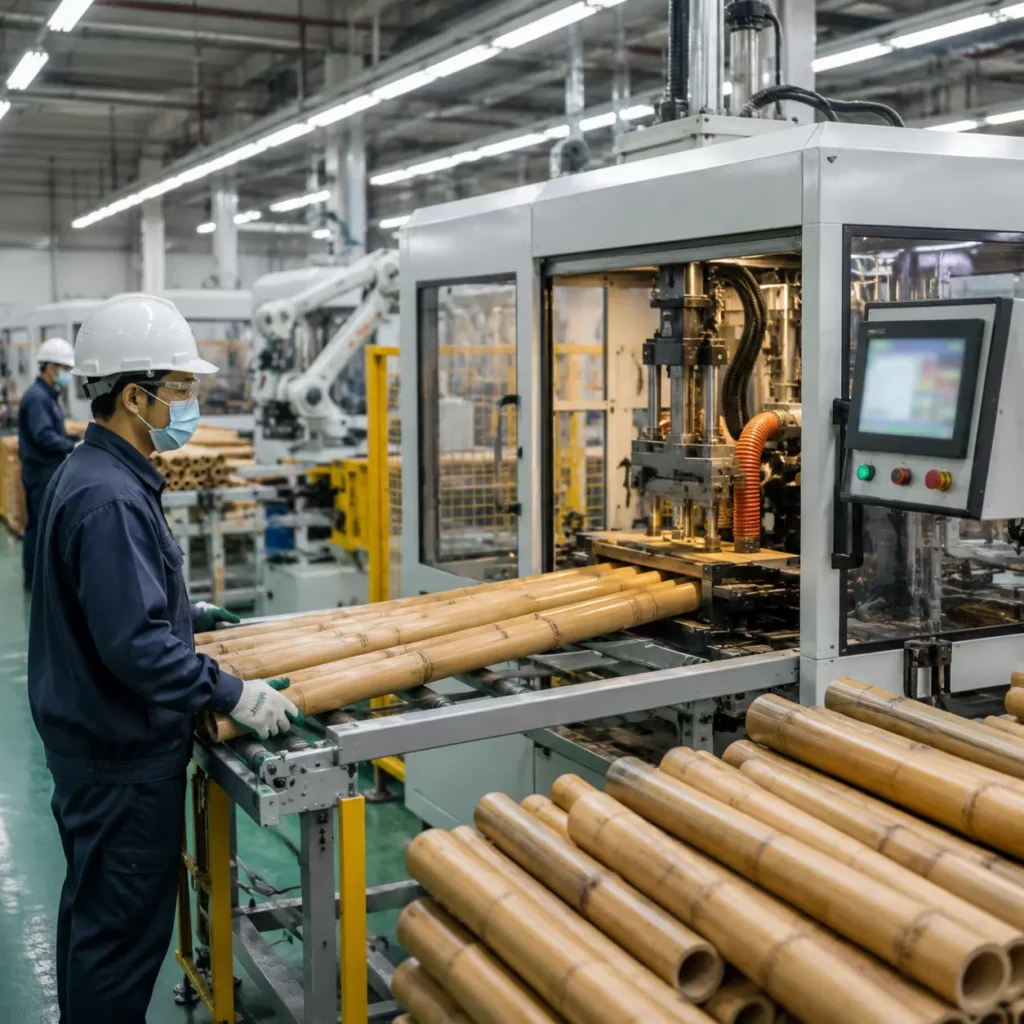
After the strips are arranged, they are placed into massive hydraulic presses. This is the core of how do they make bamboo board so dense. We apply intense pressure and heat simultaneously, curing the adhesive and fusing the strips into a single, solid panel.
| Feature | High-Pressure Lamination Benefit |
|---|---|
| Density | Makes the board harder than most hardwoods like oak or maple. |
| Stability | Reduces the risk of warping, shrinking, or swelling. |
| Durability | Ensures the layers will never delaminate under normal use. |
This high-pressure method is the standard for how to make board from bamboo that can withstand years of heavy use in flooring, furniture, or kitchenware.
Shaping and Finishing
Once the raw panel emerges from the high-pressure press, it is time to transform it into a refined, usable product. The shaping and finishing stages are where the raw material finally looks and feels like a premium product, completing the core process of how to make bamboo board.
Precision Cutting and Sizing
The pressed panels initially have rough, uneven edges from the gluing and pressing phase. We use advanced industrial saws and CNC routers to trim these panels down to exact dimensions. Precision cutting is a critical step when figuring out how to make board from bamboo that meets strict manufacturing tolerances.
- Edge Trimming: Removing the rough outer layers to reveal the clean, solid bamboo core.
- Custom Sizing: Cutting the large panels into specific lengths and widths for different projects.
- Intricate Shaping: Our advanced routing capabilities allow us to produce custom designs, such as our wholesale heart-shaped bamboo cutting board, ensuring flawless edges and exact geometric precision.
Professional Sanding for Surface Smoothness
A freshly cut panel is structurally sound but still too rough for consumer use. To understand how do they make bamboo board so incredibly smooth, you have to look at the multi-stage sanding process. We run the boards through heavy-duty wide-belt sanders to achieve a flawless finish.
- Coarse Sanding: The first pass uses lower-grit sandpaper to aggressively remove any excess dried adhesive and level out the surface joints.
- Fine Sanding: Subsequent passes use increasingly higher-grit sandpaper to polish the bamboo, closing the pores and creating a buttery-smooth texture that is safe to handle.
Protective Coating and Inspection
The final step in how to make bamboo into board involves sealing the material and conducting rigorous quality control. Bamboo is naturally durable, but it still requires a protective barrier to ensure longevity, especially in commercial applications.
- Surface Finishing: Depending on the end use, we apply food-safe mineral oils, water-based lacquers, or durable UV coatings. This seals the bamboo fibers against moisture, prevents warping, and enhances the natural grain pattern.
- Strict Quality Control: Every single board undergoes a thorough visual and physical inspection. We check for structural integrity, color consistency, perfect flatness, and smooth edges before the boards are approved for packaging and shipment.
Common Applications for Bamboo Boards
As a dedicated bamboo products manufacturer and supplier, we see firsthand just how versatile this material is once you understand how to make bamboo board. Its strength, flexibility, and sustainable nature make it a go-to material across multiple industries.
Eco-Friendly Furniture Manufacturing
Bamboo boards are incredibly strong and dimensionally stable, making them perfect for crafting durable, everyday furniture. The material holds up flawlessly to daily wear and tear while keeping environmental impact low.
- Everyday Seating: Perfect for crafting sturdy, stylish pieces like a bamboo upholstered entryway bench that can handle heavy daily use.
- Tables and Desks: Provides a smooth, hard surface that resists denting better than many traditional softwoods.
Bamboo Flooring and Wall Paneling
Because of its high density and natural scratch resistance, bamboo is a premium choice for structural room elements.
- High-Traffic Flooring: Outperforms many traditional hardwoods in durability and moisture resistance.
- Architectural Paneling: Adds a warm, natural texture to both residential living rooms and commercial office spaces.
Creative Interior Design Projects
Designers love working with these panels for custom, high-end projects. Knowing how do they make bamboo board allows creators to push boundaries in modern interiors.
- Custom Cabinetry: Delivers a sleek, modern, and highly sustainable finish for kitchens and bathrooms.
- Decorative Storage: Excellent for building floating shelves, room dividers, or even smaller projects where you might make a bamboo box for customized, elegant organization.
How to Choose High-Quality Bamboo Boards
As a dedicated bamboo products manufacturer and supplier, we know that understanding how to make bamboo board directly influences how you evaluate the final product. Whether you are sourcing materials for large-scale manufacturing or figuring out how to make board from bamboo for custom designs, selecting the right quality is crucial for a successful project.
Evaluating Grain Patterns and Aesthetics
The visual appeal of a bamboo board speaks volumes about the care taken during its manufacturing process.
- Color Consistency: Look for uniform color distribution across the entire panel without severe dark spots or blemishes.
- Grain Style: Choose between horizontal grains, which proudly display the natural bamboo nodes, or vertical grains for a sleek, modern, and linear appearance.
- Surface Finish: A premium board will be perfectly smooth, requiring minimal sanding before use.
Checking for Eco-Friendly Adhesives
The glue used to bind the bamboo strips is just as important as the raw bamboo itself.
- Emission Standards: Always verify that the boards are pressed using E0 or E1 grade adhesives.
- Health and Safety: Non-toxic, low-formaldehyde glues ensure that the final products remain safe for indoor environments and meet global environmental standards.
Understanding Hardness and Durability Ratings
Durability dictates the lifespan of your bamboo projects. High-quality pressing techniques create boards that easily rival traditional hardwoods in strength.
| Quality Metric | What to Look For | Ideal Application |
|---|---|---|
| Density | High-density compression | Flooring, kitchen countertops, and heavy-use items |
| Moisture Content | Strictly controlled between 8% – 10% | Prevents warping and cracking in varying climates |
| Structural Integrity | Multi-layer cross-lamination | Sturdy, load-bearing furniture like a 4-tier bamboo ladder shelf |
By paying strict attention to these specific factors, you guarantee that the bamboo boards you select will deliver both stunning aesthetics and long-lasting, reliable performance.

Celia
Celia is a bamboo product manufacturing expert dedicated to green innovation and sustainable supply chain solutions. With over 10 years of industry experience, he helps global businesses build premium private-label eco products. Outside of work, he is an avid nature explorer.
Frequently Asked Questions

Get a Fast, Custom Bamboo Quote