How to Import Bamboo Products from China Step by Step
Why Source Bamboo Products from China?
Are you trying to expand your sustainable product line but worrying about high costs and unreliable supply chains? If you want to scale your business, knowing how to import bamboo products from China is the most strategic move you can make.
As an experienced bamboo products supplier China, we see firsthand why global buyers consistently turn to Chinese manufacturers to build their brands. It comes down to three distinct advantages that you simply cannot find anywhere else.
- Abundant Native Resources: China is home to the world\’s most extensive native bamboo forests. This incredible supply of raw, sustainable material means you never have to worry about material shortages disrupting your inventory flow.
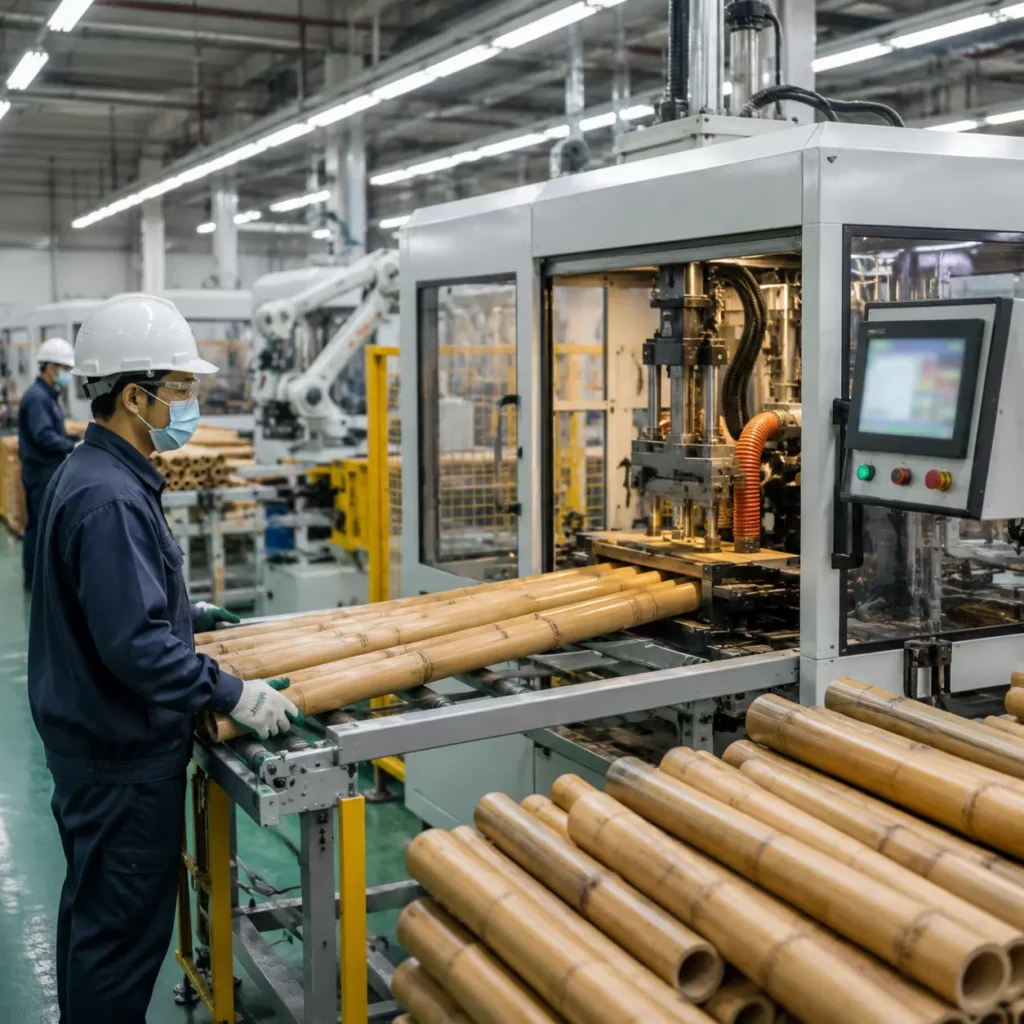
- Advanced and Scalable Manufacturing: Chinese bamboo manufacturers do not just rely on traditional methods. We utilize advanced machinery and streamlined production lines. Whether you need a small batch to test the market or require massive, scalable OEM bamboo manufacturing for a global rollout, the production capacity handles it effortlessly.
- Unbeatable Profit Margins: By working with a direct bamboo factory China, you effectively cut out the middleman. You secure high-quality, wholesale eco-friendly products at highly competitive rates, leaving you with healthy, protective profit margins even after factoring in logistics and import taxes.
Sourcing your inventory directly from the source means securing premium, sustainable quality without sacrificing your bottom line.
Top Profitable Bamboo Products to Import
Figuring out how to import bamboo products from China starts with selecting the right inventory. The market for sustainable alternatives is booming, and focusing on high-demand categories ensures you secure competitive profit margins while offering genuine value to eco-conscious consumers. Based on global retail trends, here are the most profitable bamboo categories to consider for your business.
Bamboo Kitchenware and Tableware
The kitchen is one of the easiest places for consumers to make sustainable swaps. Bamboo\’s natural antibacterial properties and incredible durability make it ideal for food preparation and serving.
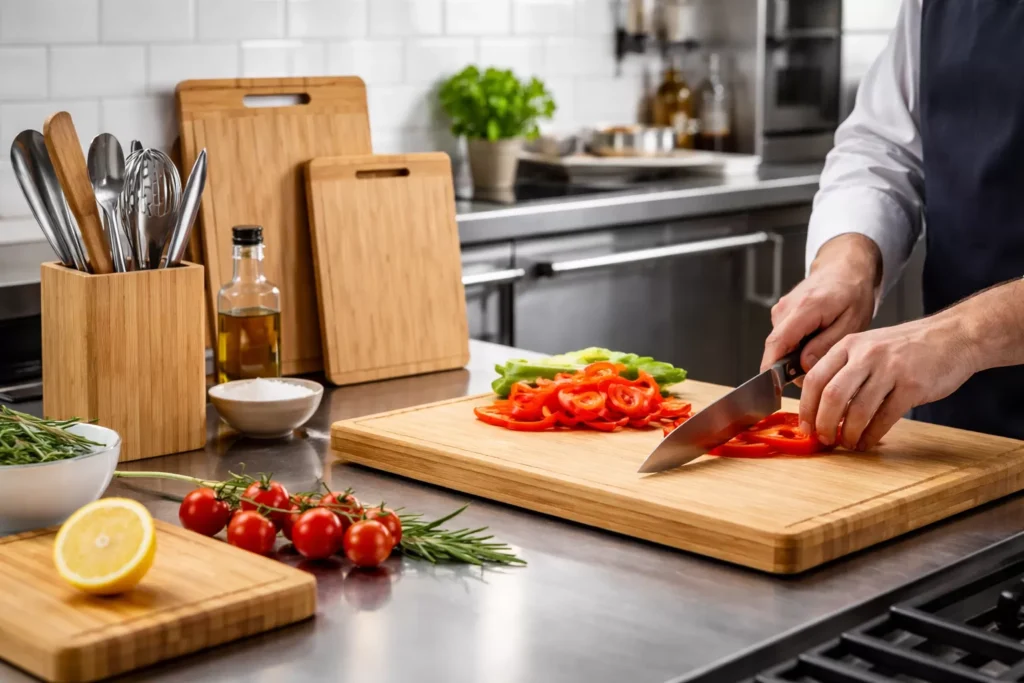
- Cutting Boards: Highly durable and gentle on knives, these are staple items in any kitchen.
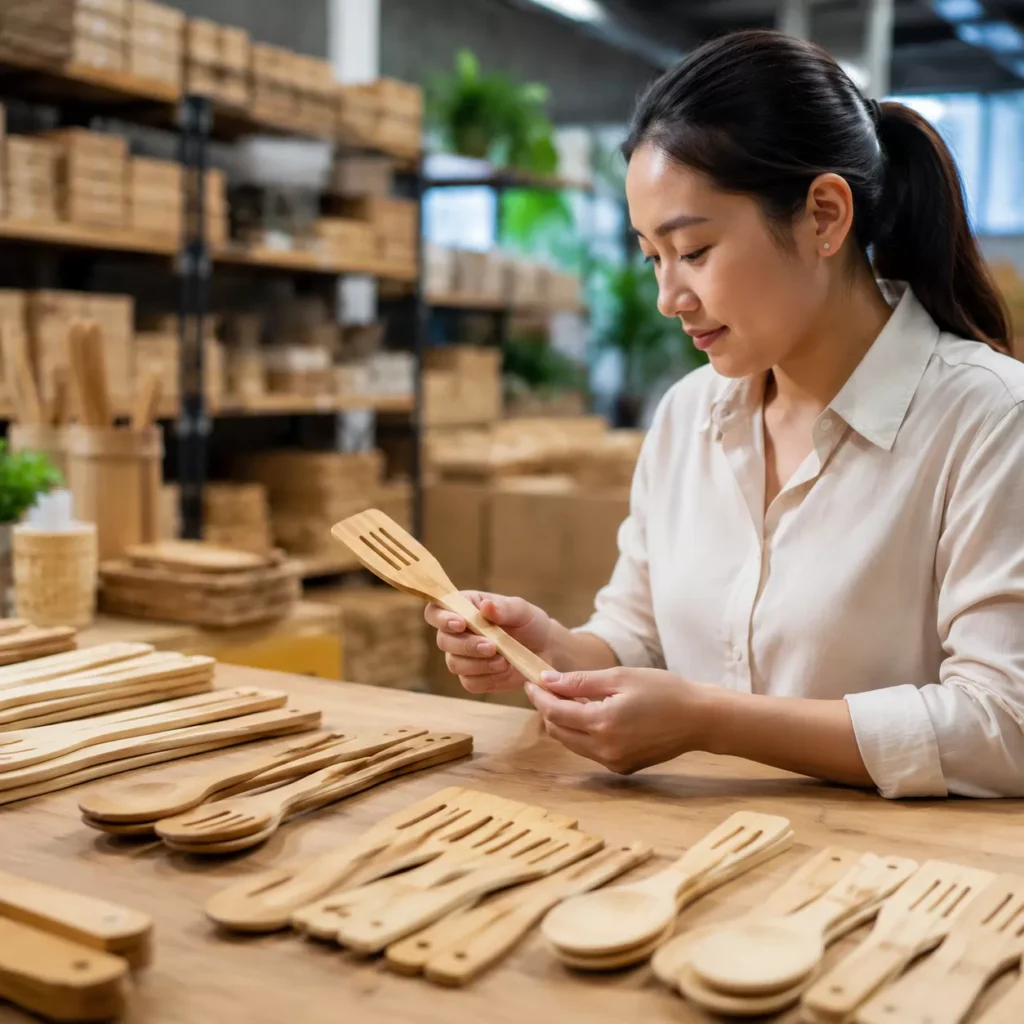
- Utensils: Spoons, spatulas, and tongs made from bamboo do not scratch non-stick cookware. Adding a high-quality 6-piece bamboo cooking utensils set to your catalog provides a fast-moving, practical product that buyers replace and gift frequently.
Eco-Friendly Packaging and Disposables
With strict global regulations rolling out against single-use plastics, the demand for wholesale eco-friendly products in the packaging and catering sector has skyrocketed.
- Disposable Cutlery: Restaurants, caterers, and event planners are actively seeking reliable bamboo alternatives. Stocking items like an eco-friendly disposable bamboo cutlery set perfectly positions your brand to capture B2B clients looking for sustainable takeout solutions.
- Packaging Solutions: Bamboo pulp and molded bamboo containers offer excellent structural integrity for shipping and retail packaging.
Home Goods and Bathroom Accessories
Beyond the kitchen, consumers want the warm, natural aesthetic of bamboo integrated throughout their living spaces. As a reliable bamboo exporter, we see consistent high-volume orders for functional home organization and bathroom luxury items.
- Bathroom Accessories: Bamboo thrives in humid environments when properly treated. Items like bath mats, soap dispensers, and water-resistant bathtub trays yield excellent retail margins.
- Home Organization: Storage boxes, drawer organizers, and specialized dispensers are incredibly popular for home tidying trends.
- Small Furniture: Lightweight yet sturdy items like shoe racks, side tables, and plant stands offer high perceived value and excellent B2B bamboo sourcing opportunities.
Step-by-Step Guide to Importing Bamboo Products
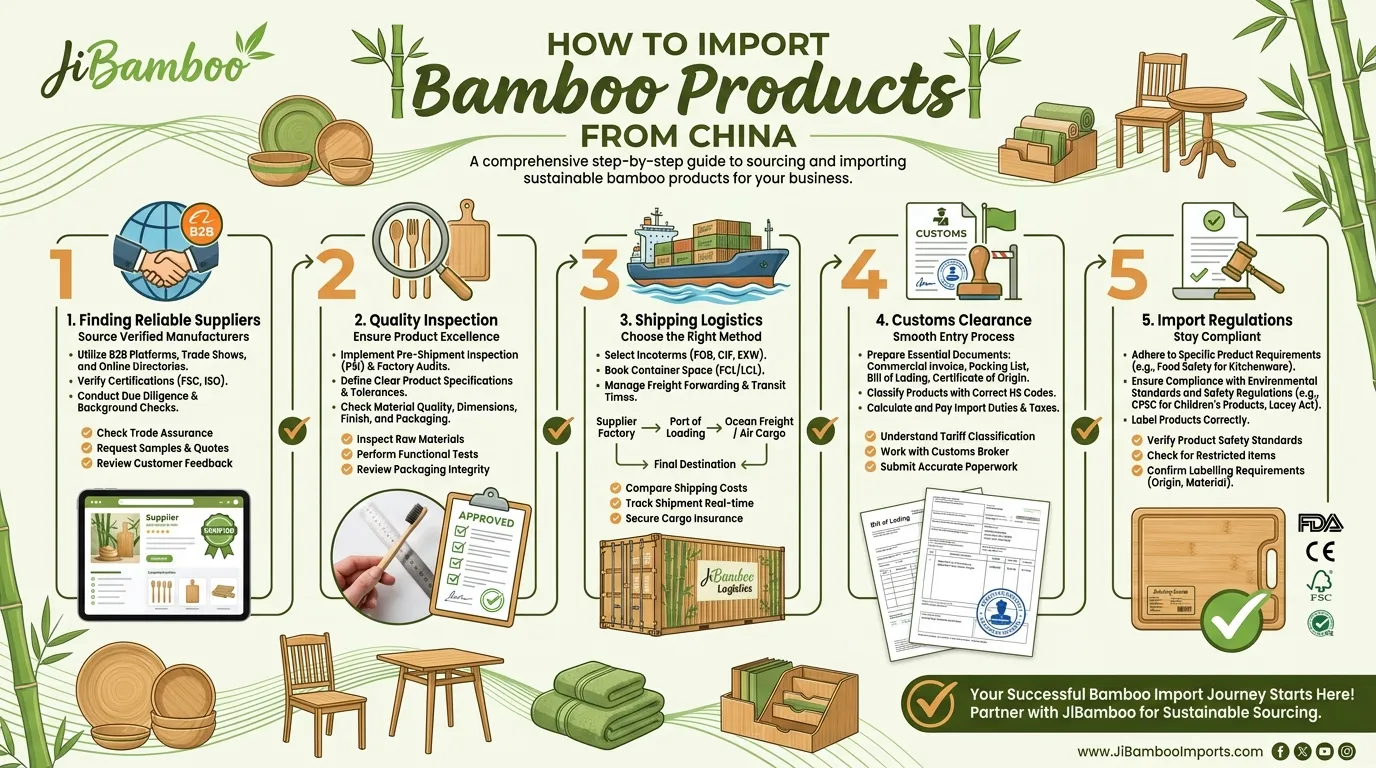
Figuring out how to import bamboo products from China is straightforward when you follow a structured approach. With a clear process, you can secure high-quality goods while keeping your profit margins healthy. Here is the exact process we recommend for successful B2B bamboo sourcing.
Step 1: Finding Reliable Manufacturers and Suppliers
The first hurdle is finding the right partner. You need to understand the difference between a trading company and a direct bamboo factory China. Trading companies offer a wide variety of goods from multiple sources but usually build a markup into their prices. Partnering directly with Chinese bamboo manufacturers gives you better factory-direct pricing, tighter quality control, and the ability to easily customize products.
- Where to look: Attend major trade shows like the Canton Fair, search reputable online B2B directories, or reach out directly to manufacturers via their official websites to verify their production capabilities.
Step 2: Requesting Samples and Quality Control
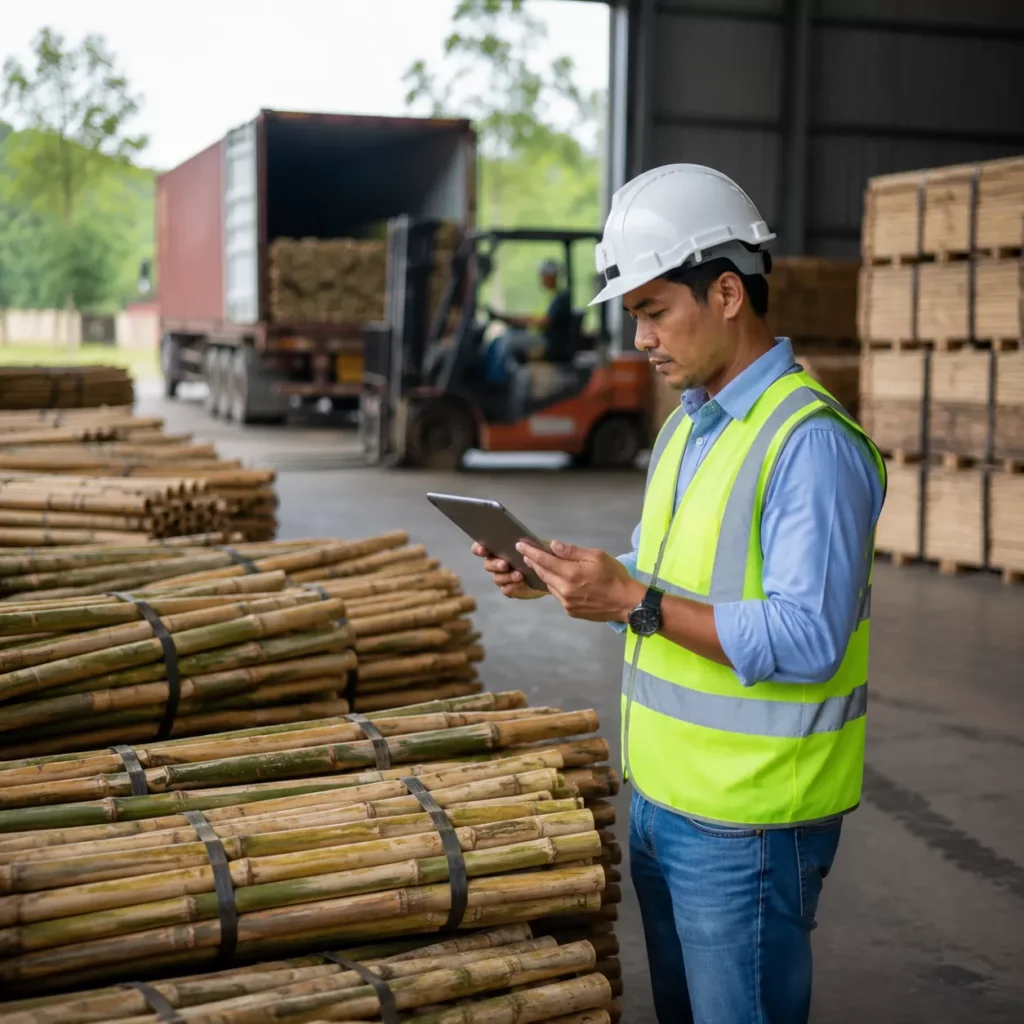
Never place a bulk order without evaluating a physical sample first. Sampling is a non-negotiable step to verify the supplier\’s actual quality. When inspecting the sample, check for a smooth finish, structural durability, and proper moisture content to prevent mold during transit. Understanding how factories make bamboo boards and process raw materials can give you valuable insight into their overall manufacturing standards and quality metrics.
Step 3: Negotiating Terms and Placing the Order
Once you approve the sample, it is time to negotiate the final contract. You will need to discuss the Minimum Order Quantity (MOQ) and agree on the shipping terms (Incoterms). The Incoterm you choose dictates who is responsible for the shipping costs, insurance, and export clearance.
Common Incoterms for Bamboo Imports:
| Shipping Term | What It Means | Best For |
|---|---|---|
| EXW (Ex Works) | You pick up the goods directly from the factory and handle all shipping steps. | Experienced buyers with a dedicated freight forwarder. |
| FOB (Free on Board) | The supplier handles export clearance and loads the goods onto your chosen vessel at the Chinese port. | Most buyers; offers the best balance of cost and control. |
| CIF (Cost, Insurance, Freight) | The supplier pays to ship and insure the goods to your destination port. | Buyers who want a hands-off shipping process. |
Establishing clear communication and locking in these terms with reliable manufacturers ensures a smooth transition from factory production to final delivery.
Navigating Customs Clearance and Compliance
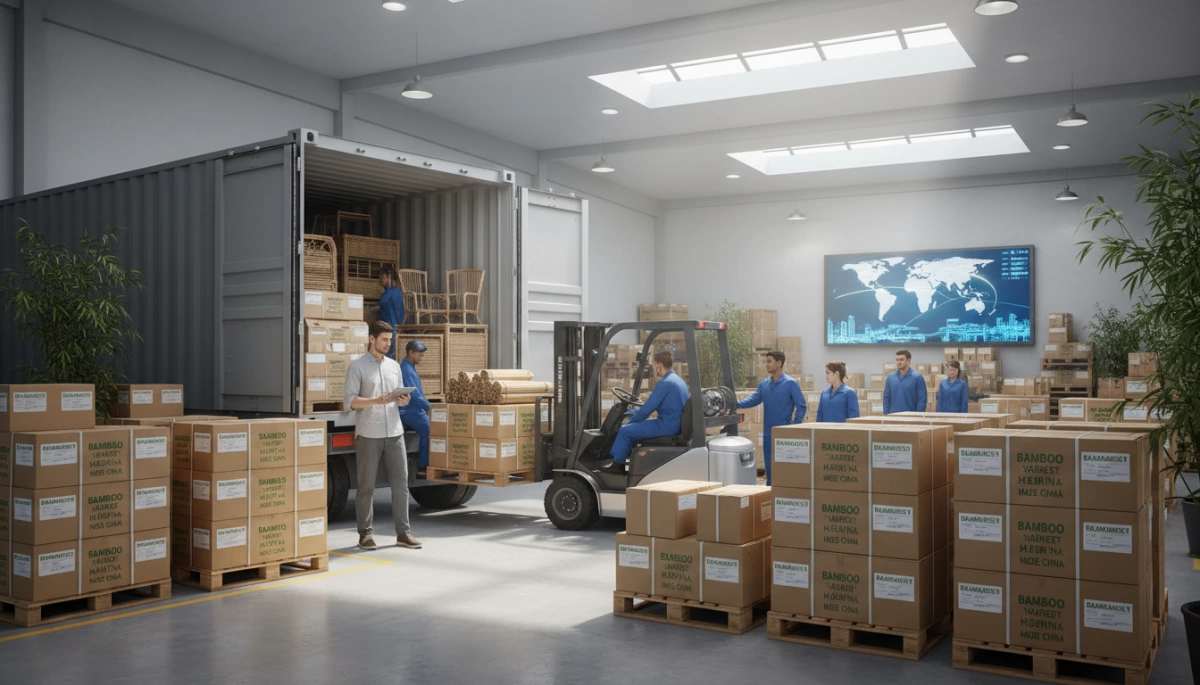
When learning how to import bamboo products from china, managing the paperwork is a critical step. Because bamboo is a natural, plant-based material, border control agencies keep a close watch. We always ensure our clients have the exact documents needed to handle customs clearance China imports without expensive delays at the port.
Crucial Documentation You Need
To get your goods safely through customs, you must have standard international shipping documents ready:
- Commercial Invoice: Outlines the transaction value.
- Packing List: Breaks down exactly what is in your shipment.
- Bill of Lading (B/L): Your official shipping receipt and title of goods.
- Certificate of Origin: Proves the goods were manufactured in China.
The Phytosanitary and Fumigation Certificates
This is where bamboo differs entirely from plastic or metal goods. Bamboo can harbor pests or mold if it skips proper treatment. You must strictly follow fumigation requirements for imports. We ensure every shipment includes a valid Phytosanitary certificate bamboo document. This certificate acts as proof that the raw material was properly heated or fumigated to eliminate pests before leaving the factory. Whether you are importing simple kitchenware or custom 3-tier bamboo drawer storage organizers, customs will hold or destroy your shipment if you lack this specific document.
HS Codes and Import Tariffs
Your product\’s HS (Harmonized System) code dictates your import taxes from China. Bamboo goods do not share a single universal code. The tax rate changes based on the finished item. For example, raw bamboo material uses a different HS code than a highly processed bamboo cutting board or a finished chair. Always verify the correct 6- to 10-digit HS code for your specific product with your customs broker before shipping. This simple check allows you to calculate exact duties upfront and protects your profit margins from surprise fees upon arrival.
Shipping and Logistics: Getting Your Products Home
When figuring out how to import bamboo products from China, managing the logistics effectively is what gets your inventory safely to your warehouse. Shipping sustainable goods requires careful planning to balance costs and protect the natural material.
Sea Freight vs. Air Freight
Choosing the right shipping method comes down to your budget and timeline:
- Sea Freight: This is the standard for bulk B2B bamboo sourcing. It is highly cost-effective and maximizes your profit margins, though transit times typically range from 20 to 40 days depending on your destination.
- Air Freight: Fast but expensive. It takes about 3 to 7 days. We generally only recommend air freight for urgent sample deliveries or extremely high-margin, low-weight items.
Working with a Freight Forwarder
Do not try to handle international shipping alone. Partner with a reliable freight forwarder who has experience with customs clearance for China imports. A good forwarder will negotiate shipping rates, book cargo space, and manage the complex paperwork required for getting your products out of the Chinese port and into your local market.
Packaging Tips to Prevent Mold and Damage
Bamboo is a natural, porous material that is sensitive to moisture, making proper packaging crucial during long sea voyages. If not handled correctly, humidity inside a shipping container can ruin a whole batch.
- Moisture Control: Ensure the factory dries the bamboo to a moisture content below 10%.
- Desiccants: Always include high-quality silica gel packets or specialized desiccants inside every master carton.
- Protective Wrapping: For items like a custom size bamboo cutting board, shrink-wrapping individual pieces provides a barrier against humid ocean air.
- Sturdy Cartons: Use double-wall or triple-wall corrugated boxes to prevent crushing during transit, ensuring your goods arrive in perfect condition.
Why Choose Jibamboo as Your Direct Manufacturing Partner?
As a leading Bamboo products supplier China, Jibamboo takes the complexity out of international sourcing. We operate as a direct bamboo factory China, meaning you bypass trading companies and work directly with the manufacturer. This setup ensures competitive pricing, rapid communication, and complete transparency throughout your supply chain.
Strict Quality Control and OEM/ODM Services
We maintain rigorous quality standards at every stage of production, from raw material selection to final packaging. Our facility is fully equipped to handle custom OEM bamboo manufacturing, allowing you to bring unique product ideas to life. Whether you need standard household items or specialized designs like a bamboo lockable knife storage box, our engineering and production teams deliver exactly to your specifications. We prioritize ethical sourcing, using only mature, sustainably harvested bamboo.
Simplifying the Export Process
Figuring out how to import bamboo products from China requires dealing with paperwork and regulations. As reliable bamboo exporters, we streamline this entire process for you.
- Documentation: We provide commercial invoices, packing lists, and bills of lading.
- Certifications: We handle the essential Fumigation and Phytosanitary certificates required for plant-based materials.
- Logistics Support: We coordinate with freight forwarders to ensure safe and timely loading.
Our team ensures you have the exact paperwork needed for smooth customs clearance China imports, preventing costly delays at your destination port.
The Jibamboo Advantage
| Partnership Benefit | What We Deliver |
|---|---|
| Factory Direct Pricing | Maximize your profit margins by eliminating middleman fees. |
| Custom Manufacturing | Comprehensive OEM and ODM services for tailored branding and design. |
| Export Compliance | Full assistance with shipping documents and customs requirements. |
| Consistent Quality | Strict defect checks and moisture control to prevent mold during transit. |

Celia
Celia is a bamboo product manufacturing expert dedicated to green innovation and sustainable supply chain solutions. With over 10 years of industry experience, he helps global businesses build premium private-label eco products. Outside of work, he is an avid nature explorer.
Frequently Asked Questions

Get a Fast, Custom Bamboo Quote