Boost Bamboo Durability in Pro Kitchens with Bamboo Care – Jibamboo
The Science of Bamboo in Commercial Kitchens
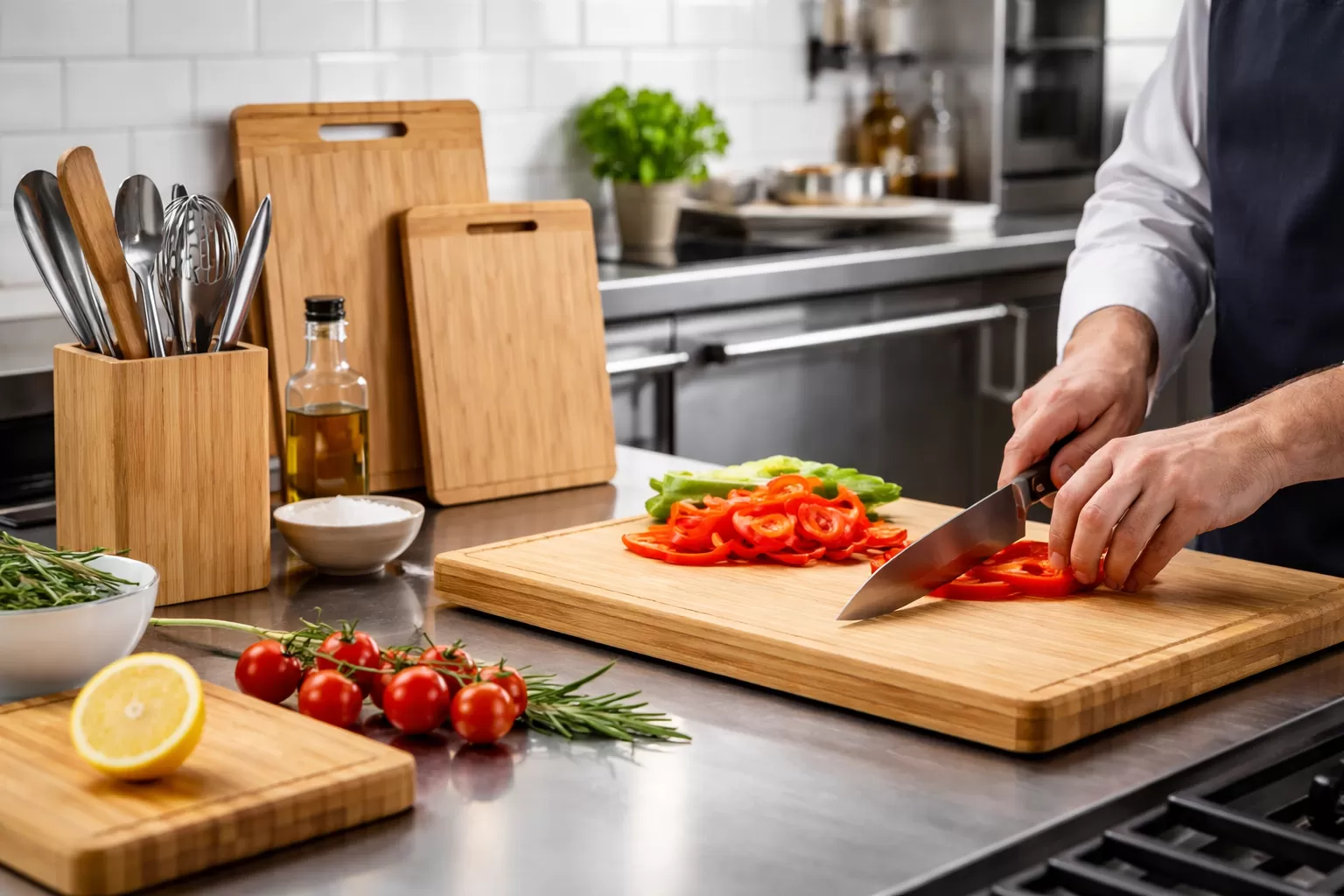
As a manufacturer and supplier of wholesale bamboo cutting boards and utensils, we often hear the same concerns from executive chefs and restaurant owners: Can eco-friendly restaurant supplies actually survive the brutal pace of a high-volume kitchen? The answer lies in the cellular makeup of the material itself. Boosting bamboo product durability in pro kitchens starts with understanding exactly why this sustainable material performs like a heavy-duty hardwood.
Unmatched Tensile Strength
When prep lines are moving fast, cutting boards take a heavy beating. Bamboo’s natural fiber structure gives it a distinct operational advantage on the line.
- Superior Durability: Bamboo naturally possesses a remarkably high tensile strength, often surpassing traditional culinary hardwoods like maple or oak.
- Minimal Scarring: This structural integrity makes professional bamboo kitchenware highly resistant to deep knife scarring, which extends the lifespan of the board and protects the edges of your expensive chef\’s knives.
Managing Moisture Absorption Rates
Humid commercial kitchens and dish pits are the natural enemies of wood products. Bamboo naturally repels water better than traditional woods, but understanding how it behaves in wet environments remains critical.
- Low Baseline Absorption: The natural density keeps liquids, marinades, and meat juices from penetrating deeply into the core of the board.
- Humidity Control: Even with highly favorable moisture absorption rates, managing environmental humidity and strictly avoiding standing water are essential steps in bamboo warping prevention and long-term stability.
Density, Hygiene, and Food Safety
In commercial food service, food safety and sanitation are non-negotiable. The cellular structure of properly manufactured bamboo is incredibly dense, creating a naturally hygienic prep surface.
- Bacterial Resistance: A much tighter wood grain means fewer microscopic crevices where bacteria, moisture, and food particles can hide.
- Sanitary Prep Stations: This dense natural barrier is exactly what makes commercial grade bamboo utensils and boards a reliable, sanitary choice for busy commercial kitchens focused on strict hygiene standards.
The Primary Threats to Bamboo in High-Volume Kitchens
As a bamboo products manufacturer, we know firsthand that commercial kitchens are brutal environments. Even with impressive natural tensile strength, improper handling can ruin professional bamboo kitchenware. To maximize bamboo product durability, you need to eliminate these three common culprits from your daily operations.
The Industrial Dishwasher
- Heat and Chemicals: Commercial dishwashers are the fastest way to destroy natural wood fibers. Extreme water temperatures and harsh sanitizing chemicals strip the bamboo of its natural oils, breaking down its structural integrity and leading to immediate splintering.
Thermal Shock
- Extreme Temperature Shifts: Moving bamboo directly from a cold prep station or walk-in cooler to a high-heat cooking area causes rapid expansion and contraction within the material. This thermal shock creates immense internal stress, making crack prevention virtually impossible if the habit continues unchecked.
Improper Drying Practices
- Standing Water and Wet Stacking: While bamboo boasts favorable moisture absorption rates compared to traditional hardwoods, it is not completely waterproof. Leaving boards sitting in sink puddles or stacking them flat while wet forces water deep into the cellular structure. This inevitably leads to severe bamboo warping and mold growth. Maintaining proper airflow and a dry environment is essential, whether you are drying heavy-duty prep boards or protecting a countertop bamboo recipe organizer box from ambient kitchen spills.
Actionable Protocols for Boosting Bamboo Product Durability
As a bamboo products manufacturer and supplier, I constantly remind kitchen managers that proper maintenance is non-negotiable. Establishing strict commercial kitchen bamboo care protocols extends the life of your equipment significantly. Here is the maintenance blueprint we use to maximize your ROI on professional bamboo kitchenware.
Seasoning Bamboo Boards
The secret to managing moisture absorption rates and locking out bacteria is a solid oiling routine. When seasoning bamboo boards, you are actively filling the microscopic grain with oil so there is no room left for water.
- Prep: Ensure the board is completely clean and fully dry.
- Apply: Rub a generous, even coat of food-grade mineral oil for wood or a natural beeswax blend into the surface.
- Rest: Let the oil soak into the fibers overnight.
- Buff: Wipe off any excess residue in the morning before prep begins.
For high-volume kitchens, especially when maintaining heavy-use presentation items like a bamboo charcuterie board, mandate this oiling process at least once a month.
Crack Prevention Techniques
Effective crack prevention comes down to environmental control. Wood fibers expand and contract based on hydration and temperature. Keep your bamboo tools away from direct heat sources, such as open burners or heat lamps. Maintaining stable hydration levels prevents the cellular structure from drying out, ensuring the wood\’s natural tensile strength remains intact so it won\’t snap under pressure.
Proper Wash and Dry Procedures
We train our clients to enforce a strict \”hand-wash only\” rule for all kitchen staff.
- Washing: Use lukewarm water and mild dish detergents. Scrub away food debris quickly without soaking the wood.
- Drying: Never lay a wet board flat on a counter. Implement vertical stacking in dish racks for optimal airflow. This guarantees both sides dry evenly, which is the cornerstone of bamboo warping prevention.
Stain and Odor Removal
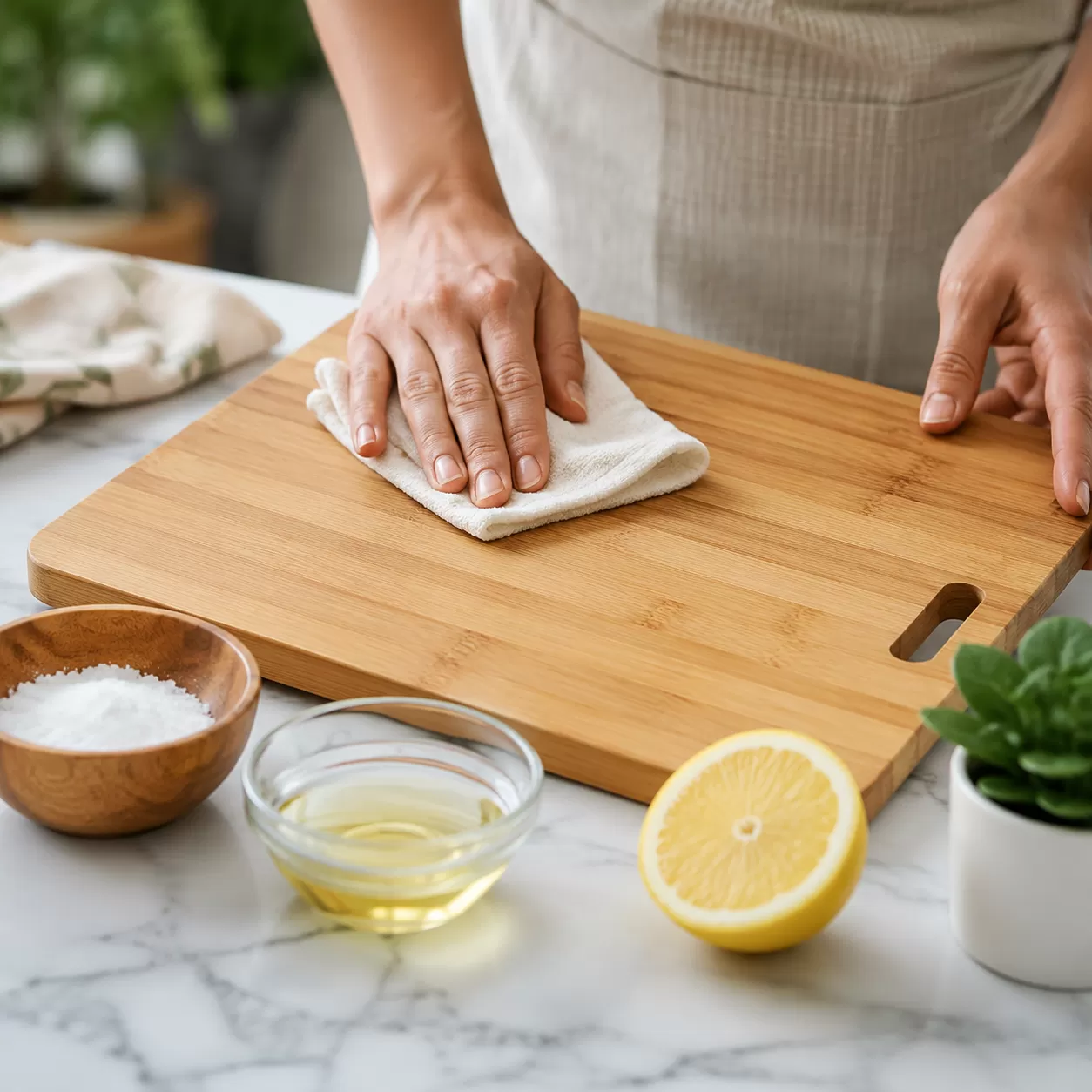
Harsh chemical degreasers strip away natural oils and slowly degrade the surface integrity. Instead, rely on natural abrasives to maintain bamboo hygiene and food safety. Sprinkle coarse kosher salt over the surface and scrub it vigorously with the flesh of half a lemon. This combination naturally lifts deep-set stains, neutralizes harsh odors like garlic or fish, and leaves the bamboo clean without causing any chemical damage.

Why Manufacturing Quality Dictates Lifespan
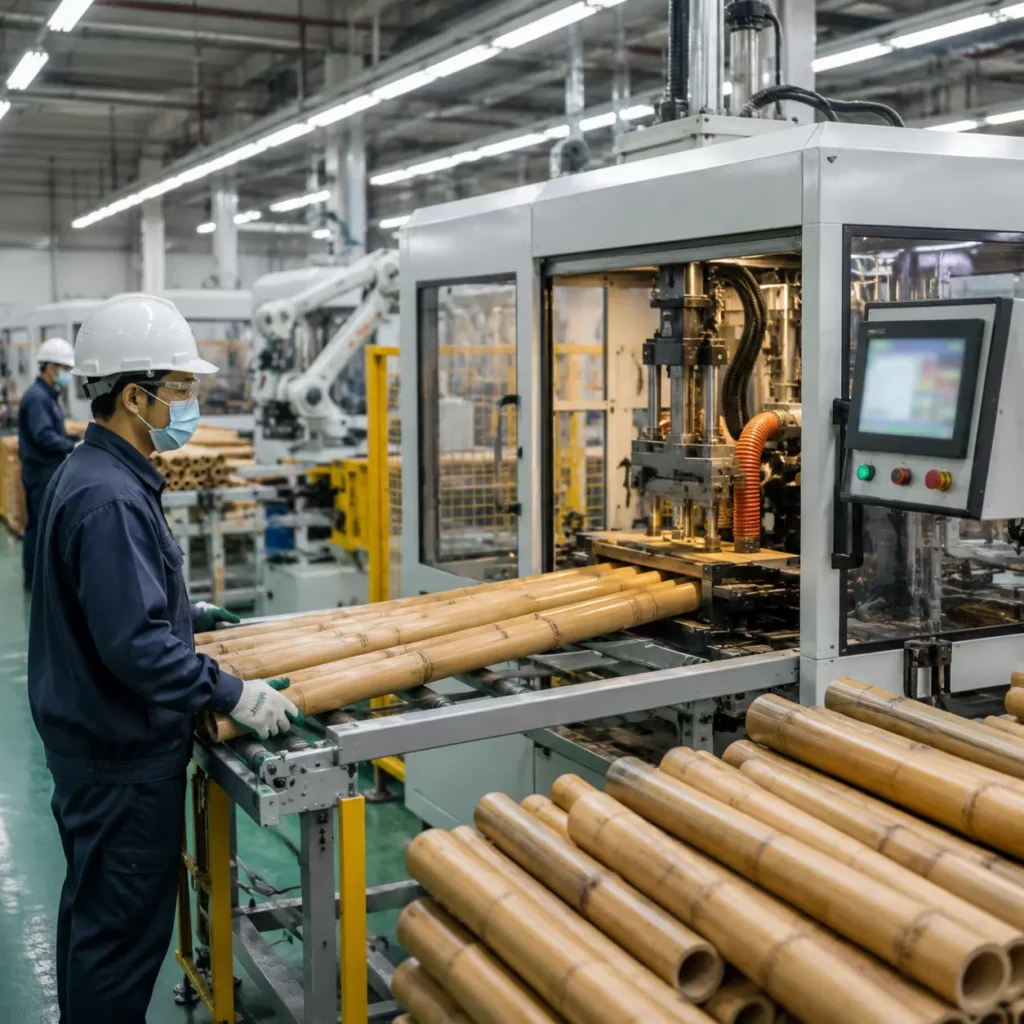
The foundation of bamboo product durability starts long before a board or utensil enters a commercial kitchen. As a dedicated bamboo products manufacturer and supplier, we know that the secret to long-lasting professional bamboo kitchenware lies entirely in the production phase.
The Harvesting Factor
Timing dictates structural integrity. Harvesting bamboo at the precise age of four to six years ensures maximum density and peak tensile strength. If cut too early, the material remains soft and highly susceptible to knife damage. If harvested too late, the fibers become brittle, making crack prevention nearly impossible under the stress of daily commercial use.
Proper Curing and Drying
Managing moisture absorption rates begins at the factory level, not just at the prep station. Proper curing and rigorous kiln-drying processes are non-negotiable steps. This advanced drying locks in the ideal internal moisture content before the product ever ships to your restaurant. If this step is rushed, the bamboo will immediately warp or split when exposed to sudden temperature shifts and kitchen humidity.
The Jibamboo Difference
We engineer our commercial-grade supplies to survive the relentless pace of high-volume kitchens. Our advanced carbonization and pressing techniques, combined with strict quality control, ensure our wholesale bamboo supplies outlast the competition. Whether you are equipping a prep line with standard boards or sourcing a heavy-duty custom bamboo cutting board, our rigorous manufacturing standards guarantee a superior lifespan that reduces your long-term replacement costs.
Manufacturing Standards Comparison
| Production Phase | Standard Manufacturing | The Jibamboo Standard |
|---|---|---|
| Harvest Age | Random (often 2-3 years) | Strictly 4-6 years for maximum density |
| Drying Method | Rapid air-drying | Precision kiln-dried |
| Moisture Control | High variability | Scientifically locked moisture rates |
| Durability | Prone to early splitting | High resistance to warping and cracking |

Celia
Celia is a bamboo product manufacturing expert dedicated to green innovation and sustainable supply chain solutions. With over 10 years of industry experience, he helps global businesses build premium private-label eco products. Outside of work, he is an avid nature explorer.
Frequently Asked Questions

Get a Fast, Custom Bamboo Quote